Economy
Ontario to Waive Provincial HST on New Homes in Major Bid to Spark Real Estate Market
Ontario’s Ford government plans to waive the provincial HST on new homes for one year to stimulate the real estate market and boost construction starts.


Emergency Stimulus for Ontario’s Housing Sector
In a bold move to revive a stagnant real estate market, Premier Doug Ford’s government is preparing to waive the provincial portion of the Harmonized Sales Tax (HST) on all new home purchases for a period of one year. The policy, expected to be a centerpiece of Finance Minister Peter Bethlenfalvy’s upcoming spring budget, represents a significant expansion of previous tax-relief efforts aimed at making homeownership more accessible.
Expanding Beyond First-Time Buyers
The revised plan marks a pivot from the government’s initial proposal in the fall economic statement, which had allocated $470 million specifically for first-time homebuyers. Faced with sluggish housing starts and a sector struggling under high interest rates, the provincial government is now moving to offer the discount to all new home purchasers, regardless of their buyer status. Sources suggest the one-year duration is intended to create immediate urgency, preventing potential buyers from waiting on the sidelines.
A Costly Gambit for the Treasury
The financial implications of the tax break are substantial. While the original targeted plan was budgeted at under half a billion dollars, industry sources estimate that waiving the tax for all new homes could cost the Ontario treasury approximately $2 billion. This comes at a precarious time for the province’s finances, as the total provincial debt is projected to surpass $500 billion by 2027, with the current deficit sitting at $13.4 billion.
Meeting Ambitious Housing Targets
The push for stimulus is fueled by the province’s struggle to meet its goal of building 1.5 million homes by 2031. With only 62,561 housing starts recorded in 2025, Ontario is falling well behind the pace required to hit its targets. Finance Minister Bethlenfalvy emphasized the need for stimulus not just for buyers, but for the stability of the construction industry, noting that without new starts today, the province faces a severe supply shortage three to four years down the road.
What Happens Next?
While Housing Minister Rob Flack and Premier Ford have remained tight-lipped on specific details, the Premier hinted at a significant boost for the construction trade during recent caucus meetings. The full details of the tax waiver, including specific price caps and eligibility criteria, will be officially unveiled when the provincial budget is tabled on March 26.

BC NEWS
Unfreezing the Market: Carney and Eby Unveil $3.2B Housing and Transit Package
Prime Minister Mark Carney and Premier David Eby announce a $3.2B plan to cut development fees and convert vacant condos into affordable housing in BC.

A Major Subsidy to Lower Development Barriers
In a significant move to address British Columbia’s housing affordability crisis, Prime Minister Mark Carney and Premier David Eby announced a $3.2 billion joint funding initiative in Vancouver on Thursday. The center-piece of the announcement is a $1.6 billion federal commitment over the next decade—matched by the provincial government—aimed at slashing development cost charges (DCCs) by up to 50 per cent in priority communities. These subsidies, which could reach as much as $40,000 per unit, are designed to jumpstart multi-unit housing projects that have stalled due to rising costs.
The funding will be funneled through the federal government’s new Build Communities Strong Fund, redirecting general taxation revenue toward essential housing-enabling infrastructure. By covering the costs of water systems, wastewater management, and local roads, the government hopes to remove the financial burden currently placed on developers, which Carney noted has reached a level that is “pricing out people.”
Addressing the ‘Condo Overhang’
Beyond lowering development fees, Prime Minister Carney hinted at a more aggressive intervention to clear the glut of unsold real estate. With Statistics Canada reporting a surge in vacant, newly built units, the federal government plans to use specialized financing mechanisms to purchase these unoccupied condos and convert them into affordable housing. Under the Build Canada Homes and BC Housing partnership, officials aim to convert more than 2,200 vacant units into affordable dwellings, with specific models for this program expected to be released this fall.
Infrastructure and Transit Expansion
The announcement also included a massive boost for regional transportation, acknowledging that housing density must be supported by reliable transit. A $2.5 billion federal investment over 10 years was pledged for new transit projects, including the ongoing Surrey-Langley SkyTrain extension. This funding is on top of the previously announced $852 million for TransLink and BC Transit, marking a comprehensive effort to link housing growth with urban mobility.
Political and Economic Skepticism
Despite the influx of capital, the plan has met with mixed reactions from local leaders. Metro Vancouver chair and Burnaby Mayor Mike Hurley expressed caution, noting that “the devil will be in the details” and maintaining his stance that “growth should pay for growth.” Concerns remain regarding whether developers will pass these significant savings on to home buyers or if the subsidy will simply bolster corporate bottom lines. As BC’s real estate market remains one of the most expensive in North America, the success of this multibillion-dollar gamble depends on whether it can truly align housing prices with local incomes.
Economy
Canada-U.S. Trade Tension Escalates as Trump Renews ’51st State’ Rhetoric
Trade Minister Dominic LeBlanc faces ‘turbulence’ in DC as Donald Trump renews ’51st state’ rhetoric and Canada pushes for a 16-year CUSMA renewal.
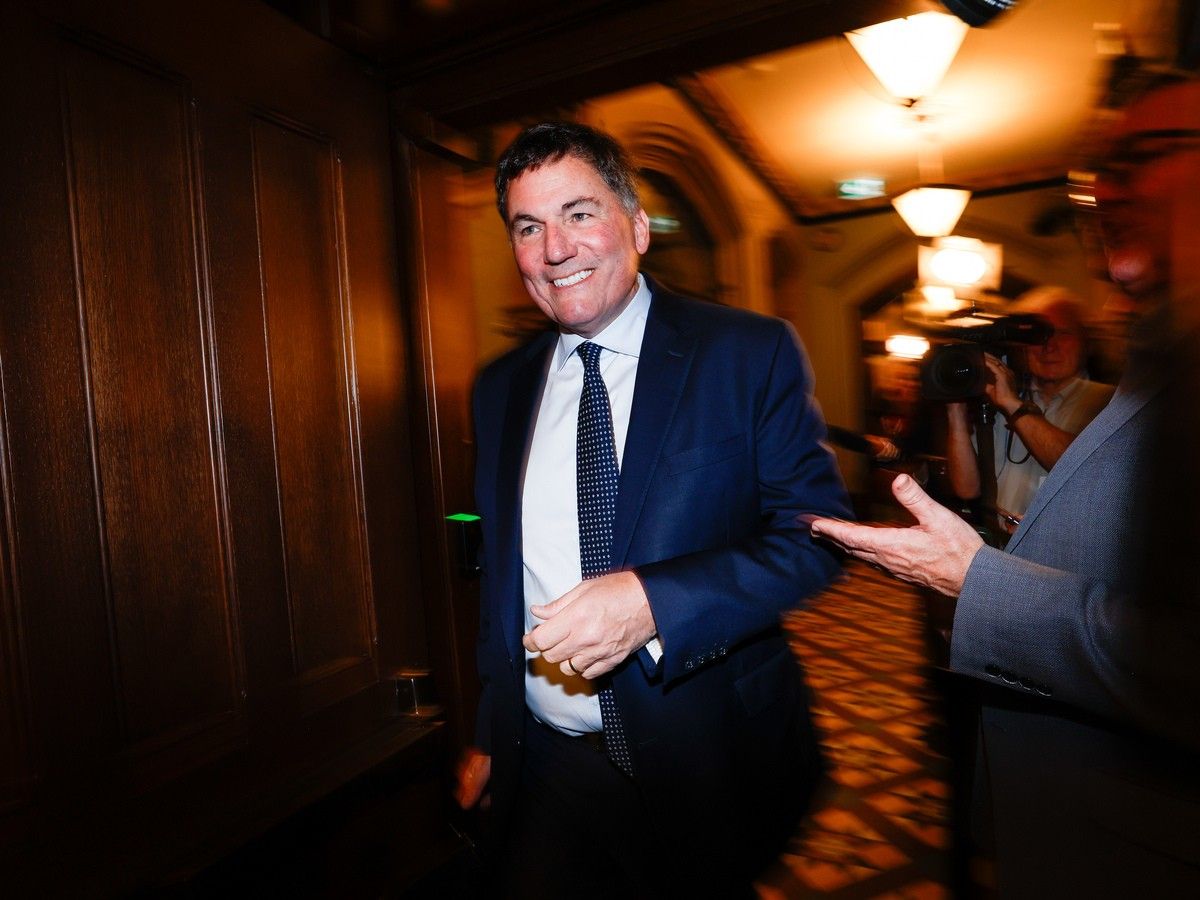
Turbulence in Washington: Trade Negotiations Face High Stakes
Canada-U.S. Trade Minister Dominic LeBlanc has admitted that his recent mission to Washington, D.C. was met with significant “turbulence,” as bilateral relations face a new wave of pressure. Accompanied by chief trade negotiator Janice Charette, LeBlanc arrived in the U.S. capital just as President Donald Trump intensified his provocative rhetoric regarding Canadian sovereignty. Despite the diplomatic friction, LeBlanc remains optimistic about securing a future for North American trade.
The ’51st State’ Controversy and CUSMA Renewal
Hours before the high-level meetings began, President Trump took to Truth Social to post a blunt message: “51st State!” The post, which linked to a report on Canada’s technical recession, was later shared by U.S. Ambassador to Canada Pete Hoekstra. This escalation comes at a sensitive time as Canada formally signaled its desire to renew the Canada-U.S.-Mexico Agreement (CUSMA) for a 16-year term. The Canadian government argues that a long-term extension is vital to protecting a trilateral trade relationship projected to reach $1.9 trillion by 2026.
Diplomatic Responses and Economic Realities
Prime Minister Mark Carney, speaking from Montreal, addressed the growing tension by dismissing calls to expel the U.S. Ambassador. Carney emphasized the necessity of a pragmatic approach, stating that the administration must be taken “as it is” due to the critical nature of the security and economic partnership. While the Prime Minister avoided using the term “recession,” he acknowledged “choppiness” in the economy, attributing recent weakness to government decisions regarding immigration rollbacks and tightened spending aimed at long-term resilience.
The Path Forward for North American Trade
The Canadian delegation met with U.S. Trade Representative Jamieson Greer to discuss specific measures intended to offer the Americans “comfort” regarding trade imbalances and rules of origin. As the U.S. administration demands stricter requirements, the Canadian side continues to push for stability. The outcome of these talks will determine the trajectory of one of the world’s most integrated economic zones, even as political rhetoric threatens to overshadow technical negotiations.
Economy
Mark Carney Issues Stark Warning: Alberta Separation Risks ‘Dangerous Brexit-Style’ Fallout
PM Mark Carney warns Alberta that a separatist vote is a ‘dangerous bluff,’ comparing the potential economic fallout to the U.K.’s post-Brexit struggles.

The ‘Dangerous Bluff’ of Economic Separation
Canadian Prime Minister Mark Carney has issued a stern warning to the province of Alberta, characterizing the burgeoning separatist movement as a “dangerous bluff” that mirrors the unforeseen economic consequences of the United Kingdom’s 2016 Brexit referendum. Speaking in Ottawa, Carney drew on his unique experience as the former Governor of the Bank of England to caution that voters are often promised a ‘soft’ transition that rarely manifests in reality.
“I saw first-hand what happened in the United Kingdom when the view was, ‘vote for this, it’ll be soft and then we’ll negotiate,'” Carney remarked. He emphasized that even a decade later, the U.K. is still grappling with the complex process of undoing policy decisions that many voters did not fully anticipate when they cast their ballots. Carney’s comments come at a time of heightened political tension as Alberta Premier Danielle Smith moves forward with plans for a non-binding vote on the province’s future within the Canadian federation.
The Shadow of Brexit and the 1995 Quebec Referendum
The Prime Minister’s comparison highlights the severe economic volatility that followed the Brexit vote, including a significant devaluation of the British pound and a long-term decline in foreign direct investment. Economists estimate that Brexit has slashed the U.K.’s GDP by as much as 8%, stifling productivity and employment growth. By invoking this precedent, Carney aims to ground the Alberta debate in fiscal reality, suggesting that the rhetoric of increased leverage in federal negotiations is a high-stakes gamble.
Canada is no stranger to separation anxiety; the 1995 Quebec referendum saw the province come within a razor-thin margin of independence, with 50.58% choosing to remain. However, the current movement in Alberta, fueled by the ‘Stay Free Alberta’ campaign and over 300,000 signatures, represents a shift in Western Canadian sentiment. Supporters argue that the oil-rich province has been systematically overlooked by federal policymakers, leading to a sense of alienation that now threatens the country’s territorial and economic integrity.
A High-Stakes Vote on the Horizon
With a non-binding vote expected this fall, the political landscape in Canada is bracing for a period of intense polarization. While the U.K. and the EU recently signed a landmark deal to reset relations, the years of legislative gridlock and economic friction serve as a cautionary tale for Canadian leaders. As the fall vote approaches, the federal government faces the daunting task of addressing Alberta’s grievances while preventing a repeat of the economic instability that has defined the post-Brexit era in Europe.
Maple Leafs Secure Top Pick as NHL Reveals Official 2026 Draft Order
Unfreezing the Market: Carney and Eby Unveil $3.2B Housing and Transit Package
Alberta Affordability Payments: $100 Relief Direct Deposits to Arrive Within Two Weeks
Ebola Crisis Escalates in Central Africa as Cases Surge 40% in One Week
History Made: Canada Records First-Ever World Cup Victory in Dominant 6-0 Rout of Qatar
The End of an Era: CBC to Stop Airing NHL Games as ‘Hockey Night in Canada’ Leaves Free TV

Opinion: John Rustad Has to Go

B.C. Supreme Court Grants Cowichan Tribes Title to Historic Richmond Lands and Fishing Rights

Vancouver Canucks Gear Up for a Make-or-Break 2025–26 Season

Province to Appeal Cowichan Tribes Land Decision

Kamloops Prepares Four Reverse Referendums on $188M in Major Projects

Kamloops Blazers Announce Off-Season Changes Ahead of 2025–26 Season
-
 OPINIONS2 weeks ago
Kerry-Lynne Findlay Won the Leadership. Now She Has to Win British Columbia.
-
National News2 weeks ago
Canada to Ban Social Media for Minors Under 16 as Carney Government Unveils Online Safety Bill
-
Energy & Resources1 week ago
Canada Shifts Energy Policy: Hodgson Declares End of Apologies for Oil Sands Success
-
LOCAL1 week ago
Where to Watch the 2026 FIFA World Cup in Vancouver: Top Bars, Patios, and Fan Zones
-
Hockey1 week ago
NHLPA Demands Investigation Resumes as Oilers Eye Mike Babcock for Potential Role
-
Canadian News1 week ago
Beyond the Brochures: The Reality of Life in Alberta’s Changing Landscapes
-
POLITICS1 week ago
B.C. Conservatives Overtake NDP in New Post-Leadership Poll
-
Middle East2 weeks ago
Fragile Calm Returns as Iran and Israel Halt Direct Strikes Following Trump Intervention