Finance
Vancouver Sees Unprecedented Shift as Rent Prices Plunge More Than Anywhere Else in Canada
Vancouver leads Canada with the steepest rent declines, offering rare relief to renters. Explore the latest data on BC’s cooling housing market and price trends.


A Major Shift in the West Coast Housing Market
Residents of British Columbia have long grappled with some of the most daunting housing costs in North America. However, recent data suggests a significant pivot is underway in the rental landscape. According to the latest National Rent Report released by Rentals.ca and Urbanation, Vancouver has recorded the most substantial rent decline of any major Canadian city, signaling a cooling trend that could offer much-needed relief to local tenants.
Breaking Down the Numbers: One-Bedrooms See Steepest Drops
The report highlights that the average asking rent in Vancouver has settled at $2,679, representing a 5.3 percent year-over-year decrease. This dip notably outpaces the national average and marks a departure from the aggressive price hikes seen in recent years. British Columbia as a whole led all provinces in the downward trend, with a 5.9 percent overall drop in average apartment rents.
The cooling effect is particularly visible in specific unit types. The average asking rent for a one-bedroom apartment in Vancouver fell to $2,358, a sharp 7 percent decline compared to the previous year. Two-bedroom units followed suit with a 2.8 percent decrease, bringing the average monthly asking price to $3,317. These figures represent a significant milestone in a market that has historically been characterized by relentless upward pressure.
High Costs Persist Despite Regional Cooling
Despite these significant declines, affordability remains a relative term in the region. North Vancouver currently holds the title of the most expensive municipality in the country, with one-bedroom units averaging $2,523 per month. Other Metro Vancouver cities, including Burnaby, Coquitlam, and Langley, continue to rank among the top 20 most expensive rental markets in Canada, suggesting that while prices are falling, the baseline remains high.
This 19-month trend of year-over-year declines in Canada suggests a broader stabilization of the market. As supply begins to align more closely with demand and economic factors shift renter behavior, the trickle-down effect in pricing is providing a rare opportunity for residents to negotiate better rates or find more manageable housing options in Canada’s most expensive corridor.

Canada News
Living on $40 a Week: How One Vancouver Couple Is Defying Record Inflation
Discover how a Vancouver couple manages a $160 monthly food budget amid rising inflation, featuring extreme grocery strategies and meal planning tips.

The Extreme Budgeting Challenge
As grocery prices continue to reach record highs across Canada, one newlywed couple in Metro Vancouver is pushing the boundaries of financial discipline. Michelle and Thomas Nijdam have embarked on a 16-week experiment to limit their total monthly food expenditure to just $160—a staggering $40 per week for two people. In a city consistently ranked among North America’s most expensive, the challenge is as much a test of mental fortitude as it is of financial planning.
Strategic Shopping and Sacrifice
The couple’s strategy revolves around a rigorous, multi-store approach. Michelle, who documents their journey on her YouTube channel @MichellesHomemaking, visits up to four different retailers weekly to capitalize on specific price advantages. By cross-referencing flyers and utilizing price-matching policies, she sources staples like flour and eggs from Superstore, cheese from Safeway, and produce from local markets like Kin’s Farm Market. To stay within their $5.33 daily limit for two, the couple has almost entirely eliminated meat from their diet, relying instead on bulk-bought beans, rice, and homemade bread.
The Psychological Toll of Scarcity
While the project began as a voluntary challenge to meet aggressive savings goals, the Nijdams admit the process is draining. The couple describes a “strange feeling” when looking at a perennially empty refrigerator and the constant stress of meal preparation. Michelle notes that failing to soak beans on the correct night can lead to a protein deficit for the following day. This logistical burden highlights the difference between those choosing to budget and the many Canadians forced into food insecurity by economic necessity.
Sustainability and the Path Forward
As they enter the final month of their challenge, the couple acknowledges that such extreme measures are likely not sustainable for the long term. Occasional dinners at family members’ homes have provided much-needed nutritional variety and leftovers. However, they hope their experience provides practical insights for others looking to shave costs from their own budgets. Once the 16-week period concludes, the couple plans to celebrate with a modest reward that has been off the menu for months: pizza and hamburgers.
Finance
Conflict of Interest Concerns Mount as Finance Minister Recuses Himself from High-Speed Rail Decisions
Finance Minister François-Philippe Champagne recuses himself from the $90B high-speed rail project due to a personal connection with an Alto executive.
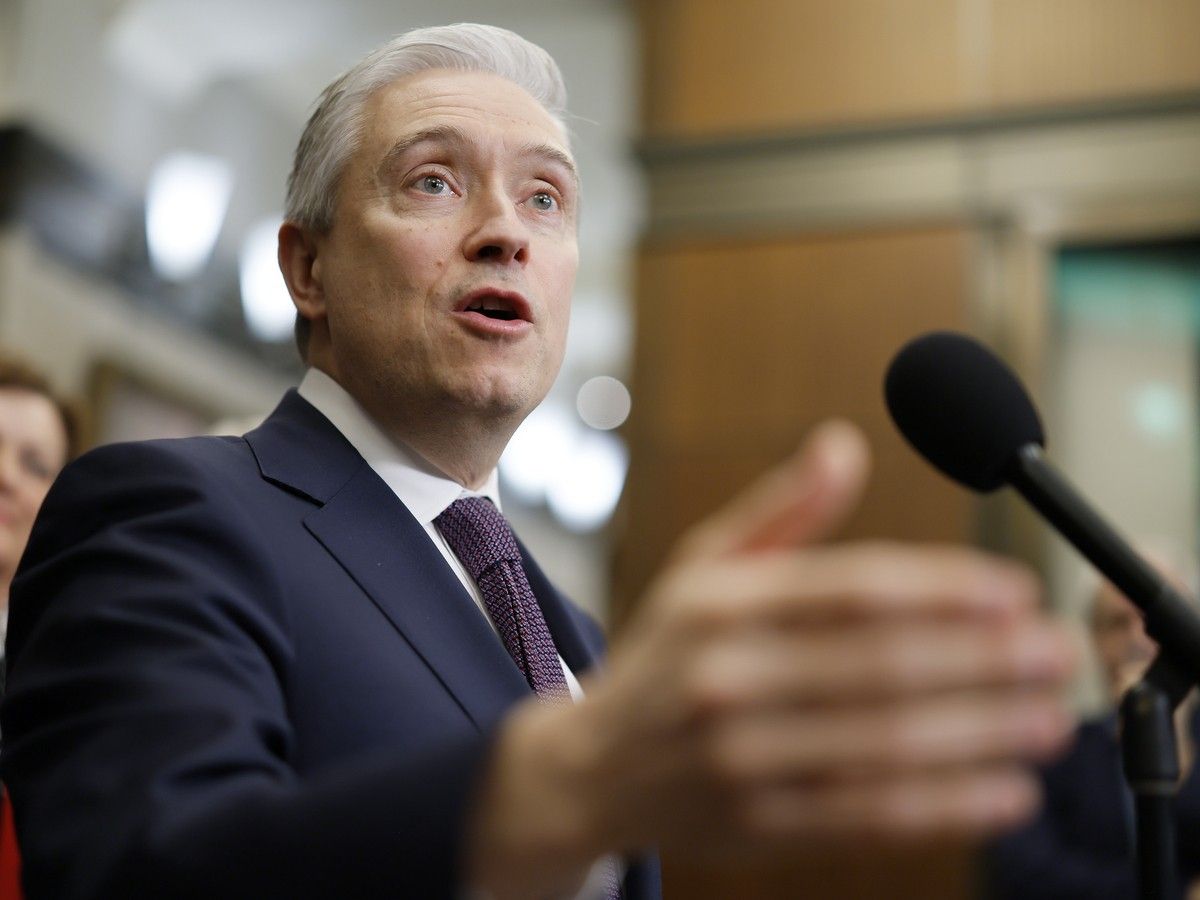
The Recusal and the $90-Billion Rail Project
Finance Minister François-Philippe Champagne is facing scrutiny over a potential conflict of interest involving the federal government’s ambitious high-speed rail project. A recently released letter, dated September 10, 2025, reveals that Champagne proactively recused himself from all discussions and decisions regarding Alto, the government-backed organization tasked with developing a rail link between Toronto and Quebec City. The project is estimated to cost taxpayers upwards of $90 billion.
Personal Connections and Budget Allocations
The core of the controversy lies in Champagne’s personal ties to the project. His partner, Anne-Marie Gaudet, was hired as Alto’s vice-president of the environment in August. Gaudet is a veteran of the environmental assessment and transportation sectors, having previously held senior positions at the Port of Quebec. While the initial funding for the project was announced before her hiring, Champagne’s first budget—delivered less than two months after his recusal letter—allocated hundreds of millions of dollars toward the rail initiative.
Questions Over Transparency and Timing
Questions have been raised regarding the transparency of the recusal process. Notably, the letter addressed to Prime Minister Mark Carney has not appeared on the official website of the Office of the Conflict of Interest and Ethics Commissioner, where such declarations are typically made public. Observers have also pointed out that the date on the letter appears in a different font than the body text, leading to further speculation on social media. Champagne’s spokesperson, John Fragos, stated that the decision not to post the letter rested with the ethics commissioner’s office.
The Scope of the Conflict Filter
The ‘conflict of interest filter’ established by Champagne extends beyond the rail project. It also covers Bionest Technologies, a bio-tech firm run by the minister’s father. Under the terms of the filter, Champagne is prohibited from participating in any communications or government decisions involving these entities. As the federal government continues to funnel significant capital into the high-speed rail corridor, the effectiveness of this ethical firewall remains a point of intense political debate in Ottawa.
Economy
Middle East Conflict Triggers ‘Uncertainty Premium’ as Canadian Mortgage Rates Surge
The Middle East war and Strait of Hormuz closure are driving up Canadian mortgage rates. Learn how the ‘uncertainty premium’ affects your next renewal.

The Global Impact on Canadian Homeowners
An escalating conflict in the Middle East is reverberating through the Canadian housing market, causing an unexpected spike in mortgage costs. Over the last three weeks, three- and five-year fixed mortgage rates have surged by 0.5 per cent, a trend driven by volatile bond yields and heightened geopolitical instability. With approximately 1.4 million mortgages set for renewal by the end of 2024, representing 23 per cent of the market, many homeowners are facing a stark financial reality compared to the record-low rates of 2021.
The Rise of the ‘Uncertainty Premium’
Market experts point to an ‘uncertainty premium’ currently being priced into lending products. While the Bank of Canada has held its key interest rate at 2.25 per cent since October 2025, the fixed-rate market—which tracks bond yields rather than central bank policy—is reacting to global supply chain threats. The closure of the Strait of Hormuz by Iran and ambiguity in U.S. foreign policy following a recent prime-time address by President Donald Trump have fueled market anxiety. Financial analysts note that lenders are raising rates now to avoid being caught short by future economic shifts.
Inflationary Pressures and the Bank of Canada
The conflict’s duration is directly impacting the cost of goods and services. Economists warn that as the closure of maritime chokepoints drives up oil and gas prices, domestic inflation will likely rise throughout the spring. This shift has altered previous forecasts of rate cuts; instead, some analysts now anticipate as many as three Bank of Canada rate hikes before the year ends. This creates a difficult environment for an economy already teetering on the edge of zero GDP growth.
Strategies for Renewal
For Canadians approaching renewal, experts recommend proactive measures. Mortgage brokers suggest securing a rate hold—often available for up to 120 days when switching lenders—to provide a buffer against further increases. While the Canadian Mortgage and Housing Corporation (CMHC) describes homeowners as ‘remarkably resilient,’ economists urge borrowers to consult financial planners early. Options such as extending amortization or adjusting mortgage terms may be necessary to navigate this period of heightened financial volatility.
Arctic ‘Rust’ Crisis: Thawing Permafrost Turns Pristine Canadian Rivers into Toxic Orange Acid
Montreal Hits Record High for Lyme Disease as Island Becomes Official Risk Zone
NASCAR Legend Kyle Busch Dies at 41, Leaving ‘Rowdy Nation’ in Mourning
A Perfect Storm: Canadian Aid Teams Face Unprecedented Risks in New Congo Ebola Outbreak
Alberta Cabinet Shaken: Key Ministers Resign as Referendum Tensions Boil Over
Nation-Building or Overreach? Carney Defends Pipeline Vision Amid B.C. Backlash

Opinion: John Rustad Has to Go

B.C. Supreme Court Grants Cowichan Tribes Title to Historic Richmond Lands and Fishing Rights

Vancouver Canucks Gear Up for a Make-or-Break 2025–26 Season

Kamloops Prepares Four Reverse Referendums on $188M in Major Projects

Province to Appeal Cowichan Tribes Land Decision

Kamloops Blazers Announce Off-Season Changes Ahead of 2025–26 Season
-
LOCAL2 weeks ago
Quantum Translation: Physicists Unveil New Mathematical Bridge to Solve Black Hole Paradox
-
POLITICS2 weeks ago
Moscow’s Shrunken Spectacle: Victory Day Parade Hits Record Low Duration Without Live Tanks
-
General1 week ago
NHL Unveils 2026 Conference Final Schedule Scenarios as Playoff Intensity Mounts
-
Canadian News1 week ago
Privacy Breach Scandal: Alberta Separatist Leader Defies Provincial Election Investigators
-
Hockey2 weeks ago
Canadiens Overpower Sabres in Dominant Game 3 Victory to Claim Series Lead
-
Asia-Pacific2 weeks ago
Tragedy on Mount Dukono: One Hiker Dead and Two Missing After Defying Exclusion Zone
-
business1 week ago
Canada Asserts Digital Sovereignty with Major AI Infrastructure Launch in British Columbia
-
energy2 weeks ago
Danielle Smith Eyes West Coast Pipeline as Key to ‘Cooperative Federalism’ and National Unity