LOCAL
The Dual-Engine Approach: Leadership Lessons from Tesla and Waymo for the Next Generation of AI
Spencer Penn, founder of LightSource, discusses the leadership strategies he learned at Tesla and Waymo and how they apply to his AI-driven procurement startup.

The Crucible of Innovation
In the high-stakes world of Silicon Valley, few entrepreneurs carry a resume as balanced and high-impact as Spencer Penn’s. Having spent formative years at both Tesla and Waymo, Penn represents a unique hybrid of two very different, yet equally dominant, corporate philosophies. Now, as the founder and CEO of LightSource, an AI-powered sourcing and procurement platform, he is applying those hard-earned lessons to modernize one of the oldest and most resistant-to-change sectors in global industry. Transitioning from the frantic, high-output culture of Elon Musk’s Tesla to the methodical, engineering-centric world of Alphabet’s Waymo provided Penn with a masterclass in how to build at scale. To understand the foundations of LightSource, one must first understand the conflicting forces of speed and precision that shaped Penn’s professional worldview.
The Tesla Methodology: First Principles and Velocity
At Tesla, Penn experienced the ‘hardcore’ culture that has become synonymous with Elon Musk’s leadership style. The mandate was simple and uncompromising: if a part or a process doesn’t make sense from a physics standpoint, it should be reinvented or discarded entirely. This ‘first principles’ approach is perhaps the most significant lesson Penn carried over to his own venture. In the traditional automotive industry, procurement is often bogged down by legacy contracts, decades-old supplier relationships, and outdated spreadsheets. At Tesla, Penn saw firsthand how rethinking the supply chain from the ground up could shave months, or even years, off production timelines.
The speed of execution at Tesla is not just a corporate preference; it is a survival mechanism. Penn learned that in a hyper-growth environment, waiting for the ‘perfect’ solution often means missing the market window entirely. He witnessed how the ‘Production Hell’ of the Model 3 ramp-up forced the company to innovate under duress, leading to breakthroughs in vertical integration that competitors are still trying to replicate. This bias toward action is a core pillar of LightSource. In the world of procurement, where decision-making traditionally takes teams weeks or months of manual labor, Penn’s startup uses AI to automate those choices in real-time. The lesson from Tesla was clear: velocity is a competitive advantage that can overcome almost any initial disadvantage.
The Waymo Way: Precision and Long-Term Rigor
If Tesla was about the raw power of momentum and iterative trial-by-fire, Waymo represented the polar opposite: the surgical precision of software-first engineering. Waymo operates with the luxury, and the heavy burden, of Alphabet’s vast resources, allowing for a level of rigor and simulation that is almost unheard of in the startup world. At Waymo, Penn learned the value of robust infrastructure. While Tesla’s ethos often involved ‘fixing it in post’ through over-the-air software updates, Waymo’s culture demanded that the foundation be nearly flawless before the first autonomous vehicle was ever deployed on public roads.
For LightSource, this translated into an obsession with data integrity. In the procurement and manufacturing space, a small error in sourcing data or a misunderstood supplier capability can lead to millions of dollars in losses or catastrophic supply chain failures. Penn brought the Waymo ethos of ‘measure twice, cut once’ to his AI models. He understood that while the user interface must be fast, the underlying data architecture must be built with the same level of care as a self-driving car’s safety stack. This balance ensures that while LightSource helps companies move fast, they are doing so on a foundation of verifiable, high-quality information.
Bridging the Gap: The Genesis of LightSource
The realization that sparked LightSource came from Penn seeing the massive friction points in manufacturing procurement during his time at these tech giants. Despite the technological leaps in electric vehicles and autonomous systems, the way companies actually purchased the billions of parts needed to build those machines remained stuck in the 1990s. Sourcing managers were still manually cross-referencing PDFs, haggling over lengthy email chains, and relying on ‘gut feeling’ for supplier selection. Penn saw an opportunity to apply the high-level AI concepts he witnessed at Waymo to the logistical challenges he navigated daily at Tesla.
LightSource was born from the vision that procurement should be as autonomous as a self-driving car. By leveraging artificial intelligence to analyze global markets, supplier performance, and risk factors in real-time, the platform allows manufacturers to identify the most efficient sourcing paths without the manual overhead that usually slows down innovation. Penn’s startup is essentially taking the ‘brain’ of a high-tech engineering firm and applying it to the ‘circulatory system’ of global manufacturing.
Leadership in the AI Era
Leading a startup in the current AI gold rush requires more than just technical knowledge; it requires a synthesis of disparate cultures. Penn often reflects on how he manages his team at LightSource by blending the intensity of a Tesla factory floor with the collaborative, intellectual environment of an Alphabet lab. He encourages his engineers to move fast and break things, but only if they have the data to understand exactly why things broke in the first place. This concept of ‘disciplined speed’ is what Penn believes will define the next generation of successful AI companies.
He also emphasizes the importance of transparency and radical candor, another trait learned from the high-pressure environments of his past. In a startup, there is no room for ego or hierarchy when solving complex technical problems. The best idea must win, whether it comes from an intern or the CEO. This meritocratic approach is essential when building complex AI systems that require constant iteration and tight feedback loops. Penn’s leadership style is a direct reflection of his career: a relentless drive for results tempered by a deep respect for engineering excellence.
Conclusion: The Future of Global Sourcing
As LightSource continues to gain traction among major manufacturers, Spencer Penn remains focused on the long-term goal: a world where the supply chain is no longer a bottleneck for human ingenuity. His journey from the factory floors of Fremont to the test tracks of Mountain View has equipped him with a rare perspective on the future of industry. By combining the urgency of the electric vehicle revolution with the technical sophistication of autonomous driving, Penn is not just building a procurement tool; he is crafting a new blueprint for industrial operations.
For aspiring founders, Penn’s story serves as a reminder that the most valuable assets are often the lessons learned in the trenches of other people’s companies. The ability to observe what works at a ‘blitzscaling’ giant like Tesla and what works at a ‘deep tech’ pioneer like Waymo allows a founder to pick and choose the best traits for their own culture. As AI begins to permeate every facet of our economy, leaders who can bridge the gap between high-speed execution and technical rigor, like Spencer Penn, will be the ones who define the next decade of innovation.

LOCAL
Where Provincial Jobless Rates Stood in September
Canada’s national unemployment rate reached 6.5 per cent in September. Explore the full provincial breakdown and regional employment figures from Statistics Canada.


National and Provincial Jobless Figures
Canada recorded a national unemployment rate of 6.5 per cent in September, according to data released by Statistics Canada on Oct. 9, 2026.
Across Western Canada, British Columbia’s jobless rate shifted to 6.4 per cent from 6.5 per cent in August. Alberta recorded a rate of 6.4 per cent, down from 6.8 per cent the previous month, while Saskatchewan dropped to 5.4 per cent from 6.0 per cent. Manitoba’s unemployment rate remained unchanged at 5.0 per cent.
In Central Canada, Ontario’s unemployment rate rose slightly to 7.0 per cent from 6.9 per cent in August, while Quebec’s rate reached 6.0 per cent, up from 5.6 per cent.
Atlantic Canada and Regional City Data
In Atlantic Canada, Newfoundland and Labrador reported the highest provincial figure at 9.1 per cent, up from 8.6 per cent in August. New Brunswick saw a minor increase to 7.4 per cent from 7.3 per cent, and Nova Scotia rose to 6.3 per cent from 6.1 per cent. Prince Edward Island experienced a decline, moving to 7.3 per cent from 7.9 per cent.
Statistics Canada also tracked seasonally adjusted, three-month moving average rates for major urban areas. However, the agency cautioned that these municipal figures are subject to wide fluctuations due to smaller statistical sample sizes.
LOCAL
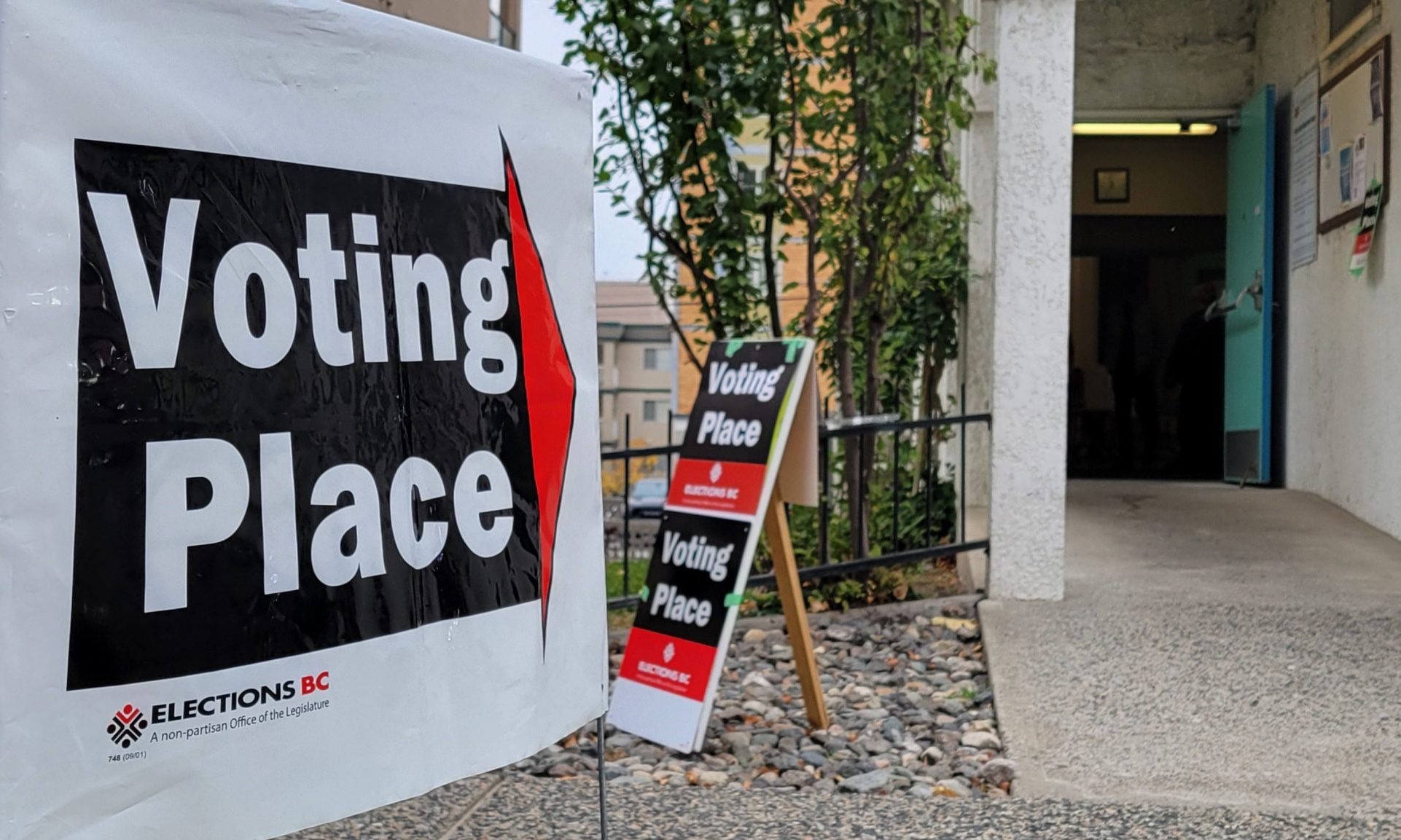
Who Is Running in Your Riding for the 2026 BC Election?
Check the full list of official candidates who have filed nomination papers for Kamloops, Fraser-Nicola, Cariboo-Chilcotin, and Salmon Arm-Shuswap ridings.
Candidates Confirmed Across Five Regional Ridings
Nomination papers have been officially submitted by individuals seeking election as local Members of the Legislative Assembly in the upcoming 2026 BC election.
In Kamloops Centre, voters will see a five-candidate field consisting of incumbent Peter Milobar for the BC Conservatives, Annelise Beach representing the BC Greens, Rocky McAfee for OneBC, Thaelo Proctor running as an Independent, and Mike Wisla representing the BC NDP.
To the north, the Kamloops-North Thompson constituency features incumbent Ward Stamer of the BC Conservatives, alongside Kory Clark running for the BC NDP and Deborah Friesen for OneBC.
Contests Set for Fraser-Nicola, Cariboo-Chilcotin, and Salmon Arm-Shuswap
In the Fraser-Nicola riding, incumbent Conservative Tony Luck faces challenges from Jason Leboe of the BC NDP and Patrick Mitchell of the BC Greens.
The Cariboo-Chilcotin ballot includes incumbent Lorne Doerkson running for the BC Conservatives, Kathryn Askew representing the BC NDP, and Douglas Gook representing the BC Greens.
Meanwhile, five candidates are contesting the Salmon Arm-Shuswap riding. Incumbent David Williams represents the BC Conservatives, joined on the ballot by Gloria Morgan for the BC NDP, Barbara Presch for OneBC, Denise Reimer for CentreBC, and Jed Wiebe for the BC Greens.
COMMUNITY
How Central Okanagan Residents Can Avoid Costly Household Plumbing Damage This Thanksgiving
RDCO warns Central Okanagan residents to dispose of Thanksgiving cooking fats in the garbage to avoid costly sewer blockages and plumbing damage.

Preventing Sewer Overflows During Holiday Gatherings
As Central Okanagan families come together for Thanksgiving between Oct. 10 and Oct. 12, regional officials are offering guidance to keep home plumbing systems safe. Disposing of fats, oils and cooking grease improperly remains the primary reason sewer lines block and overflow throughout the community.
Kit Caufield, Manager of Engineering Services for the Regional District of Central Okanagan (RDCO), explained that grease accumulation inside pipe infrastructure restricts wastewater flow over time. Caufield noted that “Over time, grease builds up inside pipes, restricting wastewater flow and creating problems not only for homeowners, but across the entire sewer system. These blockages can damage household plumbing, result in costly repairs and interfere with critical wastewater infrastructure, including sewer lift stations,”
Proper Waste Disposal Guidelines
To prevent damage to both private plumbing and public infrastructure like sewer lift stations, the RDCO recommends catching leftover food particles using a drain basket or strainer. Residents should pour warm cooking fats into a covered tin container, which can be lined with a cooking bag if intended for reuse. After the grease cools and hardens, the container should be sealed and discarded in the trash.
Additionally, fatty foods such as salad dressings, mayonnaise, and other sauces must be thrown into the garbage rather than rinsed down sinks. For larger quantities of used cooking oil, individuals can take up to two 20-litre pails to the Glenmore Landfill for recycling, though commercial amounts are prohibited. Further details can be found on the RDCO website.

Where Provincial Jobless Rates Stood in September
What New Brunswick’s Latest Unemployment Figures Mean for Your Community

Who Is Running in Your Riding for the 2026 BC Election?

How Central Okanagan Residents Can Avoid Costly Household Plumbing Damage This Thanksgiving

BC Supreme Court Judge Set to Rule on Sentence Length for Former Gang Member

Loss of Newborn Calf Puts Fresh Focus on Endangered Southern Resident Whales

Opinion: John Rustad Has to Go

B.C. Supreme Court Grants Cowichan Tribes Title to Historic Richmond Lands and Fishing Rights

Vancouver Canucks Gear Up for a Make-or-Break 2025–26 Season

Province to Appeal Cowichan Tribes Land Decision

Kamloops Blazers Announce Off-Season Changes Ahead of 2025–26 Season

Kamloops Prepares Four Reverse Referendums on $188M in Major Projects
-
LOCAL7 days ago
Your Current 3 Day Forecast — October 4, 2026
-

 COMMUNITY4 days ago
Why Okanagan Pet Owners Turned to Free BC SPCA Clinics After Wildfire Season
-

 OPINIONS4 days ago
B.C. Election Poll Puts Conservatives Ahead Five Points as Cost of Living Tops Voters’ Concerns
-

 BC STORIES4 days ago
B.C. Patients Could Soon Select Surgical Lists Based on Wait Times Under NDP Plan
-
LOCAL4 days ago
Your Current 3 Day Forecast — October 7, 2026
-

 SPORTS5 days ago
BC Lions Hold Off Toronto Argonauts Behind Sean Whyte’s Record Eight Field Goals
-
LOCAL6 days ago
Your Current 3 Day Forecast — October 5, 2026
-

 BC STORIES4 days ago
Police Request Public Help After Fatal Highway 93 Crash Kills Local Resident