LOCAL
BC Conservatives Pick a Leader Tomorrow. The Hard Part Starts After the Victory Speech.


Prediction: Caroline Elliott by a narrow margin over KLF.
Political Takeaway: Regardless of who wins, the real story is whether the Conservatives can unite the Rustad coalition and convince centrist voters they’re ready to govern. That—not the leadership vote itself—will determine the next election.
Winners, Losers and One Big Question: Who Will Lead BC Conservatives Into the Next Election?
By tomorrow night, British Columbia’s Conservatives will have a new leader.
After months of campaigning, debates, membership drives, endorsements, and enough internal drama to fill a political memoir, the race is finally coming to an end. What began as a contest to replace former leader John Rustad quickly evolved into something much larger: a battle over the future identity of British Columbia’s fastest-growing political movement.
The next leader won’t simply inherit the largest conservative movement the province has seen in decades. They’ll inherit a party that is still trying to decide what it wants to be.
And that’s why this race matters.
A Race That Exposed Deep Divisions
When Rustad stepped aside, Conservatives faced a challenge they never expected to have so quickly.
Success.
After surging from the political wilderness to become the Official Opposition, the party suddenly found itself wrestling with questions that normally confront governing parties, not insurgent movements. How broad should the coalition be? How disciplined should caucus members become? How much should the party moderate its message to attract suburban voters?
The candidates answered those questions differently.
Iain Black pitched himself as the business-minded pragmatist. Peter Milobar emphasized experience and stability. Kerry-Lynne Findlay highlighted her federal credentials. Yuri Fulmer championed entrepreneurial leadership. Caroline Elliott positioned herself as the candidate capable of expanding the party’s appeal while maintaining its grassroots energy.
Underneath those campaign messages was a much larger debate: should the BC Conservatives remain a populist insurgency or transform into a government-in-waiting?
That debate isn’t ending tomorrow night.
The Biggest Winners
The first winner is obvious: the candidate whose name is announced tomorrow evening.
But politics is rarely that simple.
The biggest winner of the campaign may actually be Caroline Elliott.
Whether she wins or loses, Elliott entered the race as one of the lesser-known candidates and exits it as one of the most recognizable figures in the party. Throughout the campaign she successfully positioned herself as a bridge between the Conservative grassroots and voters who may be considering abandoning the NDP but remain uncertain about the Conservatives.
She managed to become a serious contender while avoiding many of the controversies that consumed portions of the race.
Peter Milobar also leaves stronger than he entered. The Kamloops MLA spent the campaign presenting himself as the experienced hand capable of managing a large caucus. Even if he falls short, few expect him to disappear from the party’s front bench.
The Conservative Party itself also deserves mention.
Despite moments of tension, the race largely avoided the kind of public implosion that has damaged opposition parties elsewhere in Canada. Membership engagement remained high, fundraising remained active, and the party succeeded in keeping itself in the political spotlight.
For a party still building its organizational foundation, that matters.
The Biggest Losers
The biggest loser isn’t any individual candidate.
It’s unity.
Leadership races reveal things parties would often prefer to keep hidden. This race exposed disagreements over ideology, strategy, candidate vetting, caucus discipline, and the future direction of conservatism in British Columbia.
Those divisions didn’t disappear when ballots were cast.
Tomorrow’s winner inherits all of them.
Another loser is time.
For months, Conservatives have been talking to Conservatives. Meanwhile, Premier David Eby and the NDP government have enjoyed a period where the opposition’s focus was directed inward rather than outward.
Leadership contests are necessary. They are also distractions.
The new leader will immediately face pressure to pivot from internal politics to issues voters actually care about: housing affordability, health care access, public safety, economic growth, and the rising cost of living.
Who Will Win?
Political predictions are dangerous business.
Just ask anyone who has covered BC politics for more than five minutes.
That said, leadership races are often won by candidates who successfully combine momentum with organization.
Based on the final weeks of campaigning, Caroline Elliott appears to have both.
Her campaign effectively captured the mood of many members who want to preserve the energy that fuelled the party’s growth while broadening its appeal to voters who remain on the sidelines.
She has positioned herself as a candidate focused less on internal ideological battles and more on the practical challenge of winning government.
That message appears to have landed at the right moment.
If there is a challenger capable of upsetting that momentum, it is likely Peter Milobar, whose organizational strength and caucus experience continue to resonate with members looking for stability.
But heading into the final hours, Elliott appears to have a slight edge.
The Morning After
The most important moment of this race won’t be tomorrow night’s victory speech.
It will be the morning after.
The next Conservative leader will wake up facing the same challenge that has confronted every successful opposition movement in modern politics.
It is one thing to attract frustrated voters.
It is another thing entirely to convince British Columbians that you are prepared to govern.
The Conservatives have already proven they can grow.
They have already proven they can become a major force in provincial politics.
The next leader must prove they can turn that momentum into a credible alternative government.
Tomorrow night decides who gets the opportunity.
The months ahead will determine whether they can seize it.

Environment
Invasive Mosquitoes Carrying Brain-Swelling Virus Detected in B.C. Sea-to-Sky Region
B.C. health officials detect invasive mosquitoes and the California serogroup virus in the Sea-to-Sky region following a cluster of childhood encephalitis cases.


Investigation Sparked by Pediatric Cases
Health officials in British Columbia have confirmed the presence of invasive mosquitoes and a concerning virus capable of causing brain swelling in the Sea-to-Sky corridor north of Vancouver. The investigation was launched by the B.C. Centre for Disease Control (BCCDC) following a cluster of three pediatric encephalitis infections reported in the region in August 2024. Researchers concentrated their efforts between Squamish and Pemberton to identify the source of the rare infections.
California Serogroup Virus Identified
Anya F. Smith, a senior scientist with the BCCDC, stated that researchers discovered two mosquito species testing positive for the California serogroup virus. This group of pathogens is known to cause serious neurological conditions in humans, including encephalitis and meningitis. Among the carriers identified was the northern house mosquito, a species native to Africa, Asia, and Europe that has successfully established itself as an invasive species in British Columbia.
Impact of Climate Change on Disease Transmission
While the detected virus levels were low—preventing the team from confirming a specific strain—the findings are seen as a critical baseline for public health preparedness. Stefan Iwasawa of the BCCDC emphasized that rising temperatures due to climate change are expected to increase human exposure to various mosquito species. Understanding which species are present and what viruses they carry is essential for developing effective prevention and response strategies in a changing environment.
Assessing the Public Risk
Despite the detection, health authorities including Vancouver Coastal Health and the University of B.C. maintain that the current risk of serious illness remains low. Historical data shows only 15 known cases of California serogroup virus in B.C. between 2009 and 2024, with no new cases reported in the Sea-to-Sky corridor so far in 2025. Officials continue to monitor the situation while advising the public to take standard precautions against mosquito bites during the warmer months.
LOCAL
UBC Dementia Research Receives $500,000 Boost for Revolutionary Blood-Based Testing
The Cowell Foundation invests $500,000 in CLEAR Foundation to fund UBC’s groundbreaking biomarker research and blood-based dementia testing.
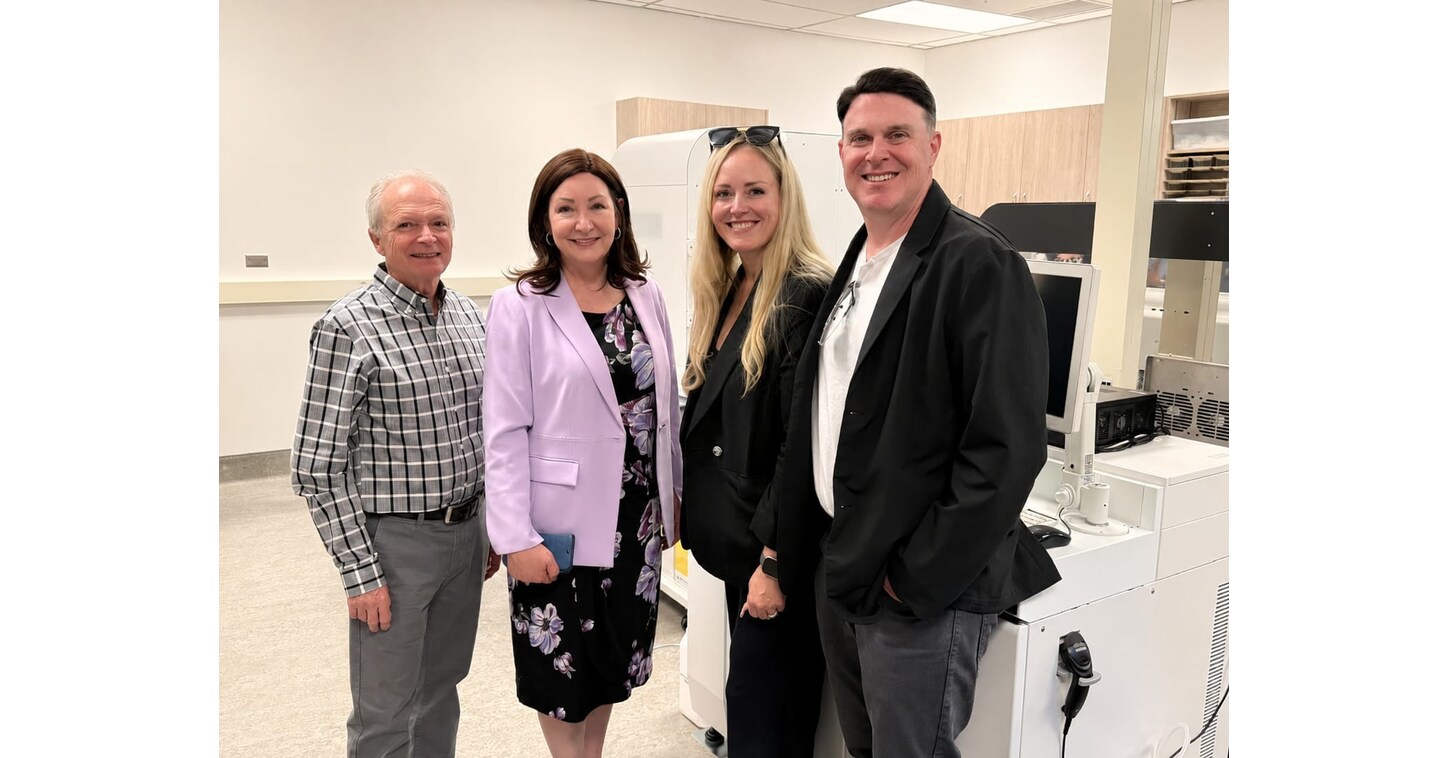
Transforming Dementia Diagnosis at UBC
The landscape of Alzheimer’s research in British Columbia has received a significant boost following a $500,000 investment from The Cowell Foundation. This visionary gift, directed to the CLEAR (Canadians for Leading Edge Alzheimer Research) Foundation, is set to accelerate the development of biomarker-based detection methods at the University of British Columbia’s newly inaugurated Core Facility for Neurology Biomarker Innovation (CFNBI).
Located within the UBC Hospital, the CFNBI represents a critical step forward in neurological science. Under the leadership of Dr. Cheryl Wellington, a Professor in the Department of Pathology and Laboratory Medicine, the facility is focused on a transformative goal: replacing expensive neuroimaging and invasive lumbar punctures with simple, accessible blood tests. These tests detect protein biomarkers that reflect real-time biological changes in the brain, offering a window into the progression of dementia long before traditional symptoms may surface.
Investing in Talent and Technology
The four-year commitment from The Cowell Foundation will be split between two primary initiatives. First, an Operating Grant will provide critical resources to established dementia researchers in British Columbia. Second, a Research Trainee Award will fund the development of the next generation of scientific talent, ensuring that the province remains at the forefront of global medical innovation.
Dr. Wellington’s team has already established a formidable track record, boasting over 50 publications and more than 70 managed projects. Their collaborative network of 140 experts has already attracted upwards of $75 million in funding, but this new investment specifically targets the practical application of biomarker technology to make diagnosis more equitable and timely for patients throughout the region.
The Growing Urgency of Dementia Research
The timing of this investment is critical. Currently, more than 770,000 Canadians are living with some form of dementia, and projections suggest this figure will nearly double by 2050. As the population ages, the demand for early and accurate diagnosis becomes a matter of public health necessity. Early detection is widely considered the key to effective intervention and, eventually, a cure.
In a statement, the Cowell family emphasized the personal nature of their contribution, noting the profound impact the disease has on families and caregivers. By funding the CLEAR Foundation—which directs 100% of public donations toward research—this gift ensures that the path toward a future free from dementia remains a top priority for Canadian science.
Opinion by Chad Dashly
People are tired. Not just politically tired. Financially tired. Emotionally tired. Tired of working harder every year only to watch groceries climb, housing drift further out of reach, and small businesses struggle under the weight of taxes, regulation, and uncertainty.
And while regular people tighten their belts, governments keep acting like the solution to every problem is another announcement, another consultant, another bureaucracy.
The disconnect is growing.
You can feel it when young people quietly admit they may never own a home in the communities where they grew up. You can feel it when seniors choose between prescriptions and groceries. You can feel it when small business owners—the backbone of every town in this province—wonder whether it’s still worth the risk to keep going.
British Columbians are not asking for miracles. They are asking for competence. Stability. Common sense.
That is why political movements across Canada are changing so quickly right now. People are no longer satisfied with polished talking points and carefully scripted politics. They want leaders who understand what it feels like to run payroll, balance a household budget, or worry about the future their kids are inheriting.
The rise of grassroots conservative energy in BC is not happening because people suddenly became angry overnight. It is happening because many voters feel ignored by institutions that no longer seem connected to everyday life.
And here’s the reality many political insiders still fail to understand: this isn’t just about ideology anymore. It’s about trust.
Trust that governments will spend responsibly.
Trust that public safety matters.
Trust that hard work still means something.
Trust that communities—not just political brands—come first.
At the same time, conservatives also face a choice. Winning frustration is easy. Building confidence is harder.
British Columbians do not want endless outrage. They want steady leadership. They want solutions that lower the temperature instead of raising it. They want leaders who can disagree without dividing neighbours against each other.
The next phase of politics in BC will belong to the people who understand both sides of that equation:
- the frustration people feel,
- and the hope they still want to believe in.
Because despite everything, British Columbians remain remarkably resilient. Communities still show up for each other. Volunteers still carry organizations that governments alone cannot replace. Entrepreneurs still take risks. Families still sacrifice to build something better.
That spirit is still here.
The question now is whether political leadership can catch up to the people it is supposed to serve.
Vancouver Canucks Appoint Manny Malhotra as Head Coach Amid Massive Front Office Overhaul
Canada-U.S. Trade Tension Escalates as Trump Renews ’51st State’ Rhetoric
Ottawa Unveils $10 Billion Infrastructure Windfall for Quebec Transit and Health Care
Actor Nick Pasqual Sentenced to 32 Years to Life Following Brutal Stabbing of Former Partner
Invasive Mosquitoes Carrying Brain-Swelling Virus Detected in B.C. Sea-to-Sky Region
Canada Secures Decisive 2-0 Victory Over Uzbekistan as World Cup Fever Hits Edmonton

Opinion: John Rustad Has to Go

B.C. Supreme Court Grants Cowichan Tribes Title to Historic Richmond Lands and Fishing Rights

Vancouver Canucks Gear Up for a Make-or-Break 2025–26 Season

Province to Appeal Cowichan Tribes Land Decision

Kamloops Prepares Four Reverse Referendums on $188M in Major Projects

Kamloops Blazers Announce Off-Season Changes Ahead of 2025–26 Season
-
Alberta Government2 weeks ago
Alberta Referendum Turmoil: UCP Bid for Independence Vote Hits Procedural Wall
-
Canada News2 weeks ago
A Perfect Storm: Canadian Aid Teams Face Unprecedented Risks in New Congo Ebola Outbreak
-
BC NEWS2 weeks ago
Arctic ‘Rust’ Crisis: Thawing Permafrost Turns Pristine Canadian Rivers into Toxic Orange Acid
-
General2 weeks ago
Alberta Cabinet Shaken: Key Ministers Resign as Referendum Tensions Boil Over
-
Canadian Government2 weeks ago
Danielle Smith Faces Blowback from All Sides Over Convoluted Alberta Secession Referendum
-
Health2 weeks ago
Ebola Crisis Escalates in Congo as WHO Raises Risk Assessment to ‘Very High’
-
Economy2 weeks ago
Nation-Building or Overreach? Carney Defends Pipeline Vision Amid B.C. Backlash
-
NHL2 weeks ago
Road Warrior Canadiens Stun Hurricanes in Dominant Eastern Conference Opener