POLITICS
Tony Abbott Eyes Return to Frontline Politics in Bid for Liberal Party Presidency
Former PM Tony Abbott is in the frame for the Liberal Party presidency, aiming to reform the party’s strategy and reclaim voters from One Nation.


The Return of a Conservative Icon
In a move that signals a significant shift toward the ideological right, former Prime Minister Tony Abbott is reportedly preparing a bid for the federal presidency of the Liberal Party. This potential return to the political center stage marks Abbott’s most high-profile role since his prime ministership ended in 2015. Supporters believe Abbott can provide the organizational discipline and ideological fire needed to reclaim the party’s dominance in Australian politics.
A Strategic Alliance with Angus Taylor
Abbott’s candidacy is closely linked with the current leadership of Angus Taylor. Together, they aim to reform the party’s organizational wing—responsible for fundraising, strategy, and campaigning—to better compete against the rising influence of One Nation. While some party members remain cautious of Abbott’s polarising history, Taylor has reportedly expressed confidence that the former leader would handle the role with the necessary discipline to avoid generating internal friction.
The Battle for the Liberal Soul
The quest for the presidency may not be a clear path for Abbott, as another former party leader, Alexander Downer, is also being considered for the position. The upcoming vote in late May follows the expected departure of current president John Olsen. Abbott’s pitch centers on democratizing the party and reducing the influence of factional powerbrokers, specifically targeting moderate elements in New South Wales that he believes have diluted the party’s conservative core.
Reclaiming the Right-Wing Base
The Liberal Party is currently facing a dual challenge: retaining moderate voters while preventing further leakage of its base to Pauline Hanson’s One Nation. Abbott, a prolific commentator and board member at Fox Corporation, remains a hero to the party’s conservative establishment. His advocates argue that his stance on migration and traditional values is perfectly timed to capitalize on a global trend toward populism and a backlash against progressive social policies. However, critics warn that doubling down on Abbott’s unapologetic agenda could alienate the centrist voters required to win a general election.


LOCAL
Who Is Running in Your Riding for the 2026 BC Election?
Check the full list of official candidates who have filed nomination papers for Kamloops, Fraser-Nicola, Cariboo-Chilcotin, and Salmon Arm-Shuswap ridings.

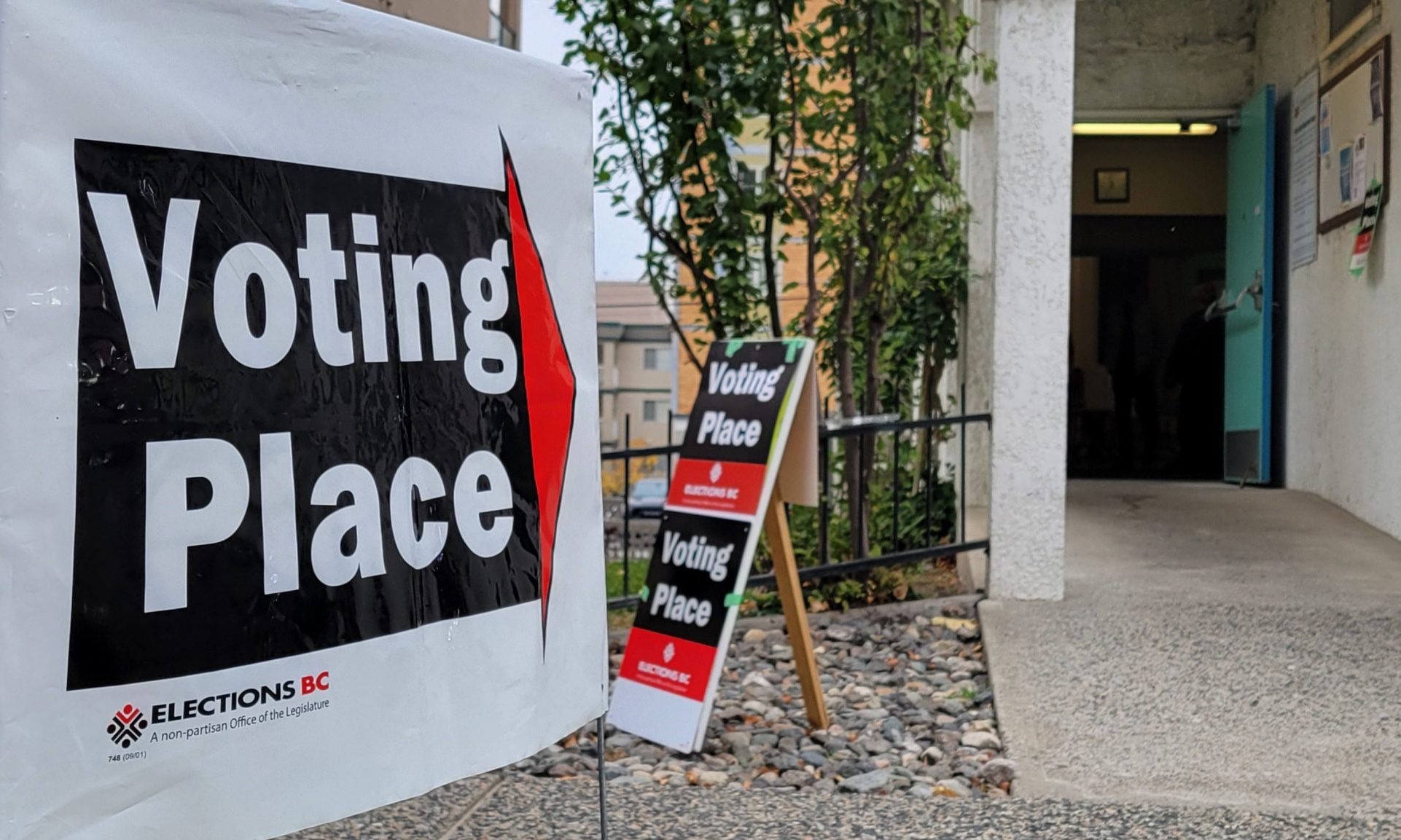
Candidates Confirmed Across Five Regional Ridings
Nomination papers have been officially submitted by individuals seeking election as local Members of the Legislative Assembly in the upcoming 2026 BC election.
In Kamloops Centre, voters will see a five-candidate field consisting of incumbent Peter Milobar for the BC Conservatives, Annelise Beach representing the BC Greens, Rocky McAfee for OneBC, Thaelo Proctor running as an Independent, and Mike Wisla representing the BC NDP.
To the north, the Kamloops-North Thompson constituency features incumbent Ward Stamer of the BC Conservatives, alongside Kory Clark running for the BC NDP and Deborah Friesen for OneBC.
Contests Set for Fraser-Nicola, Cariboo-Chilcotin, and Salmon Arm-Shuswap
In the Fraser-Nicola riding, incumbent Conservative Tony Luck faces challenges from Jason Leboe of the BC NDP and Patrick Mitchell of the BC Greens.
The Cariboo-Chilcotin ballot includes incumbent Lorne Doerkson running for the BC Conservatives, Kathryn Askew representing the BC NDP, and Douglas Gook representing the BC Greens.
Meanwhile, five candidates are contesting the Salmon Arm-Shuswap riding. Incumbent David Williams represents the BC Conservatives, joined on the ballot by Gloria Morgan for the BC NDP, Barbara Presch for OneBC, Denise Reimer for CentreBC, and Jed Wiebe for the BC Greens.
BC STORIES
B.C. Voters Face October Election as Polls Show Shift in Party Support
Recent polls show the B.C. Conservatives leading the NDP ahead of the Oct. 24 election as voters focus on the cost of living and healthcare concerns.
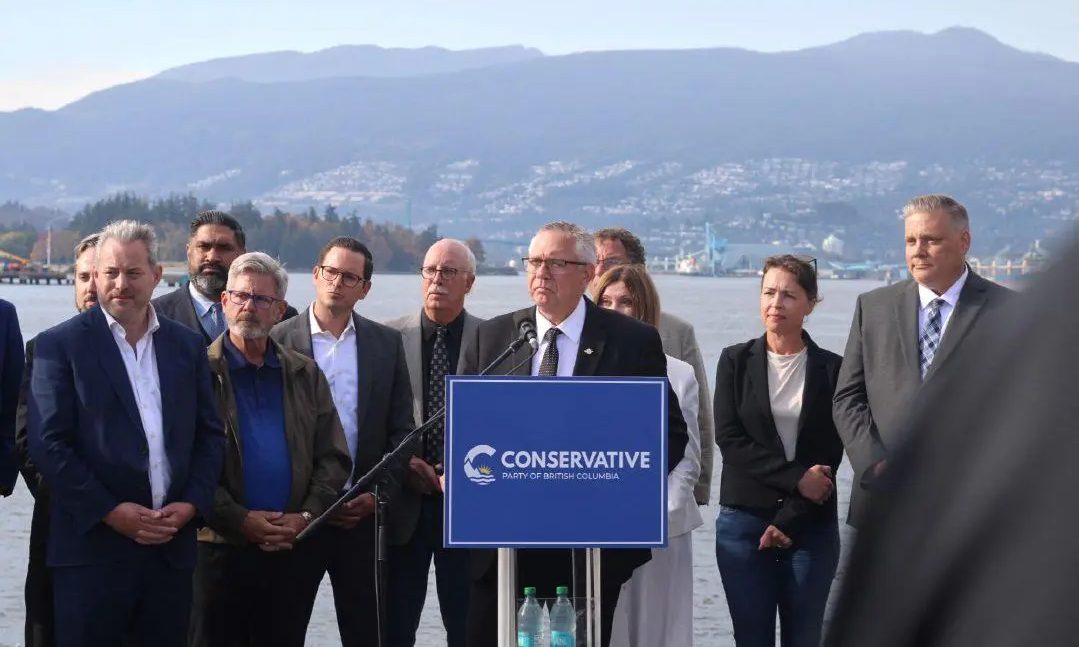
Voters Prioritize Cost of Living Over Tariff Concerns
As British Columbians prepare to cast their ballots on Oct. 24, recent survey data reveals that economic pressures are dominating voter concerns. In an Angus Reid Institute poll, 57 per cent of respondents identified the cost of living as a primary issue, while 42 per cent cited healthcare. Other concerns including drug addiction and homelessness also recorded slight increases among survey participants. Conversely, concern over U.S. President Donald Trump’s tariffs has decreased, with 10 per cent of respondents naming it a top issue compared to 15 per cent previously.
Polling Numbers Show Shift in Provincial Race
The reduced focus on tariffs comes after NDP Leader David Eby initiated a snap election to secure a mandate to address U.S. trade policies, despite having two years remaining in his term. A Mainstreet Research telephone survey found that 46 per cent of residents strongly disapprove of the early election call. That survey, conducted Sept. 30 to Oct. 1 among 827 residents with a margin of error of 3.4 per cent, showed Conservative support at 45 per cent, giving them an eight-point margin over the NDP.
An online survey by Angus Reid conducted Oct. 1 to 3 with 1,000 participants indicates Conservative support at 48 per cent—an increase of five percentage points—and NDP support at 43 per cent, reflecting a margin of error of three percentage points. While the NDP gained seven points since the previous Angus Reid poll, smaller parties lost ground, with the B.C. Greens receiving seven per cent support and other parties combining for two per cent.
Regional Breakdown Highlights Divided Support
Polling data indicates significant regional differences across the province. According to Angus Reid, Conservative backing is highest in the Fraser Valley at 62 per cent compared to 28 per cent for the NDP, and reaches 57 per cent in the Interior, where they hold a 21-point advantage over the NDP. The pattern shifts along the Coast and Vancouver Island, where the NDP leads with 48 per cent support compared to 39 per cent for the Conservatives.
LOCAL
Why a Kelowna council candidate’s humorous signs are attracting international attention
Kelowna city council candidate Brady Rogers goes viral globally after American influencer shares his funny campaign sign, driving unexpected donations.
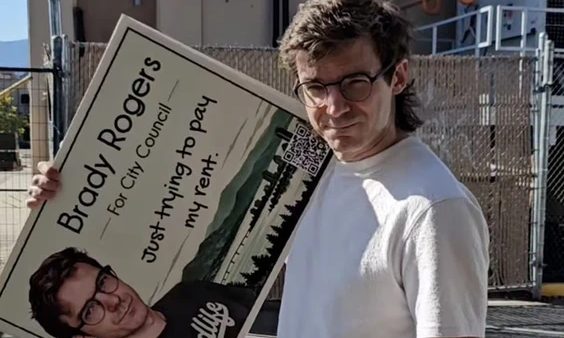
Viral exposure sparks worldwide donations
An online post by American influencer Mandi Jung highlighting a Kelowna municipal campaign sign has triggered global attention and financial contributions. Jung shared an image of one of Brady Rogers’s 35 lawn signs with her 100,000 followers on X, calling it “the most millennial thing I have seen in my entire life.” The post garnered 147,000 likes, while an associated video reel amassed roughly 1.5 million views, driving unexpected international interest toward the local race.
“This last week especially has been pretty wild,” Rogers said. “It’s been very unexpected. Locally I’ve been getting attention, but then somebody in the states I guess found me and made a reel about my campaign and it’s I think had one and a half million views or something.”
Humour as a voter engagement strategy
The 33-year-old candidate, who operates a business 3D-printing household items from recycled plastic, turned to social media to launch his campaign. “I decided I wanted some signs and had some funny ideas, so I put it out on Instagram to raise some money and set up a campaign,” Rogers said.
His physical campaign signs state, “Brady Rogers for city council. Don’t worry, I’ll fix everything. Terms and conditions apply.” Readers scanning a QR code on the signs are directed to a website where Rogers openly states that he lacks qualification, lacks political expertise, and dislikes politics, before concluding, “Fine, I’ll do it.” Rogers explained that his lighthearted approach aims to capture public focus and motivate residents to participate in voting.
Policy proposals and local platform
Beyond the viral marketing, Rogers is focusing on city governance and community challenges. “Our city has a lot of good initiatives and good work being done on it. But I’m looking at how we can better integrate some of those initiatives and perhaps provide more unified leadership on it,” he stated.
His platform addresses specific business and resident concerns, particularly regarding street-level drug use. “There’s more the city can be doing to address the immediate concerns that businesses and residents have around things like open drug use. I’ve been looking into the idea of perhaps testing a zero-tolerance policy in Kelowna around open drug use. It’s not going to stop people from doing drugs, but I think it would mean a lot to businesses if we could at least push the drug use off the streets,” Rogers said.

Where Provincial Jobless Rates Stood in September
What New Brunswick’s Latest Unemployment Figures Mean for Your Community

Who Is Running in Your Riding for the 2026 BC Election?

How Central Okanagan Residents Can Avoid Costly Household Plumbing Damage This Thanksgiving

BC Supreme Court Judge Set to Rule on Sentence Length for Former Gang Member

Loss of Newborn Calf Puts Fresh Focus on Endangered Southern Resident Whales

Opinion: John Rustad Has to Go

B.C. Supreme Court Grants Cowichan Tribes Title to Historic Richmond Lands and Fishing Rights

Vancouver Canucks Gear Up for a Make-or-Break 2025–26 Season

Province to Appeal Cowichan Tribes Land Decision

Kamloops Blazers Announce Off-Season Changes Ahead of 2025–26 Season

Kamloops Prepares Four Reverse Referendums on $188M in Major Projects
-
 LOCAL7 days ago
Have You Seen Him? Public Help Sought in Locating Missing Traveller Last Seen in Kamloops
-
 BC STORIES7 days ago
Why a Familiar Political Name is Joining the Kamloops-North Thompson Race
-
LOCAL6 days ago
Your Current 3 Day Forecast — October 4, 2026
-
 LOCAL7 days ago
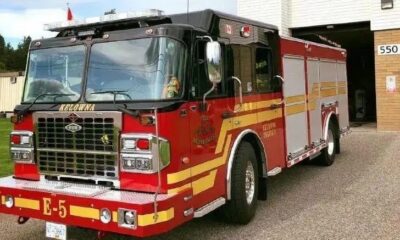
Two Displaced as Investigators Eye Suspicious Four-Plex Fire in Kelowna
-
 COMMUNITY4 days ago
Why Okanagan Pet Owners Turned to Free BC SPCA Clinics After Wildfire Season
-

 OPINIONS4 days ago
B.C. Election Poll Puts Conservatives Ahead Five Points as Cost of Living Tops Voters’ Concerns
-
 BC STORIES4 days ago
B.C. Patients Could Soon Select Surgical Lists Based on Wait Times Under NDP Plan
-
LOCAL3 days ago
Your Current 3 Day Forecast — October 7, 2026