POLITICS
Canada Unveils Massive $2B National AI Strategy to Secure Digital Sovereignty
Prime Minister Mark Carney announces a $2B National AI Strategy for Canada, focusing on digital sovereignty, 250k new jobs, and a 60% business adoption rate.


A New Chapter for Canadian Innovation
Prime Minister Mark Carney officially launched Canada’s comprehensive national artificial intelligence strategy in Toronto on Thursday, signaling a massive $2 billion federal commitment to secure the nation’s place in the global technology race. Emphasizing a shift from global reliance to sovereign resilience, Carney framed the strategy as a necessary safeguard to ensure that the transformative power of AI benefits the public interest rather than a select few tech giants.
Ambitious Growth and Economic Integration
The centerpiece of the plan involves a radical acceleration of AI adoption within the private sector. Currently, only 12 per cent of Canadian businesses utilize AI tools; the federal government aims to spike that figure to 60 per cent by 2034. To support this transition, Ottawa will inject $500 million into the Regional Artificial Intelligence Initiative and an additional $700 million into the AI Compute Access Fund. These investments are designed to provide small and medium-sized enterprises (SMEs) with the high-performance computing power and financing necessary to scale up and compete internationally.
Building a Workforce for the Future
Addressing the growing anxiety over automation, the strategy projects the creation of up to 250,000 new jobs by 2031. A cornerstone of the labor plan is a National Literacy Initiative, which seeks to provide entry-level AI training to one million post-secondary students and thousands of educators. However, the plan has met with some resistance. The Canadian Union of Public Employees (CUPE) has criticized the government for what it describes as ‘soft-pedalling’ worker protections, arguing that the strategy prioritizes corporate profit over job security.
Safety, Privacy, and Sovereign Infrastructure
The strategy also addresses the darker side of AI, including deepfakes, disinformation, and privacy erosion. A key feature is the allocation of $50 million to the Canadian AI Safety Institute to evaluate AI models and track emerging risks. Furthermore, Canada plans to build a world-leading, sovereign supercomputer by 2031. This infrastructure is intended to grant Canada the autonomy to develop critical AI capabilities without being beholden to foreign infrastructure, effectively securing Canada’s digital borders for the next decade.

POLITICS
B.C. Conservatives Overtake NDP in New Post-Leadership Poll
New Leger poll shows BC Conservatives leading the BC NDP 45% to 41% following Kerry-Lynne Findlay’s leadership win, signaling a shift in voter sentiment.

A Shift in British Columbia’s Political Landscape
In a significant development for West Coast politics, the British Columbia Conservative Party has surged ahead of the governing BC NDP, according to the latest Leger B.C. Pulse Check. The survey marks the first time since the last provincial election that the Conservatives have held a lead, signaling a potentially volatile environment as the province nears its next electoral cycle.
The poll finds the BC Conservatives sitting at 45 per cent among decided voters, a four-point advantage over David Eby’s BC NDP at 41 per cent. The BC Greens remain a distant third with 8 per cent support. This shift follows the recent election of Kerry-Lynne Findlay as the new Conservative leader, an event that appears to have galvanized the party’s base despite a relatively low level of public familiarity with her personal profile.
The Findlay Factor and Public Perception
While the leadership change has bolstered polling numbers, Kerry-Lynne Findlay remains a mystery to many British Columbians. According to Leger, only 26 per cent of respondents claimed to be familiar with her, and nearly 43 per cent had never heard of her prior to the survey. Despite this, she is currently neck-and-neck with Premier David Eby in preferred premier rankings, with Eby holding 30 per cent to Findlay’s 27 per cent.
The political rhetoric has sharpened alongside the polling numbers. Premier Eby recently criticized Findlay’s approach, comparing her role to that of a “MAGA regional manager” rather than a provincial leader. Findlay has since dismissed these labels, characterizing the NDP government as “extremists” and “ideologues” who prioritize political theory over economic prosperity.
Voter Priorities and Economic Concerns
The poll highlights a clear divide in voter priorities that could dictate the upcoming campaign. Housing costs and general affordability remain the primary concerns for British Columbians across the board, followed closely by health care. However, Conservative supporters are increasingly focused on the economy, tax relief, and public safety, whereas NDP supporters place higher emphasis on social services and the housing crisis. With the economy gaining ground as a pivotal issue, the BC Conservatives appear to be successfully capturing the frustration of residents concerned with the province’s financial trajectory.
General
Centrist Resurrection: The Battle to Reclaim the BC Liberal Brand
B.C. centrists and former BC United members are fighting to revive the BC Liberal brand to fill a growing gap between the NDP and Conservatives.

A Search for the Political Middle Ground
In the wake of a polarizing BC Conservative leadership race, a dedicated group of political centrists is mobilizing to resurrect the defunct BC Liberal Party brand. Disaffected moderates met recently to discuss reclaiming the name, arguing that the provincial political landscape has left a gaping void between an increasingly left-leaning NDP and a populist Conservative Party under new leader Kerry-Lynne Findlay.
The Weight of a Legacy Name
Political strategists involved in the movement, including Mark Marissen, emphasize that the Liberal name remains one of the most powerful political assets in British Columbia. Despite the party’s 2023 rebranding to BC United—a move widely criticized as a historic blunder—internal polling and strategist assessments suggest the ‘Liberal’ label still resonates with voters who desire fiscal responsibility paired with progressive social values. A recent Research Co. poll indicated that 41 percent of British Columbians believe it is time to bring back the BC Liberals, suggesting that the brand’s equity remains high despite its recent dormancy.
Legal and Structural Hurdles
Reclaiming the name is a complex legal challenge. Under the B.C. Elections Act, new parties cannot register names that might cause confusion with existing or recently active entities. Because BC United is still registered as ‘BC United (formerly known as the BC Liberal Party),’ any attempt to use the name ‘Liberal’ could be blocked by Elections BC. Proponents of the revival are considering two main paths: a legal challenge to the name restrictions or a ‘hostile’ takeover and subsequent rebranding of the remaining BC United infrastructure.
Shifting Political Alliances
The movement has attracted high-profile figures such as climate scientist and former BC Green leader Andrew Weaver, who argues that the current options leave moderates ‘politically homeless.’ Weaver criticized the governing NDP for fiscal irresponsibility and the Conservatives for divisive rhetoric. While political scientists warn that a third party might primarily act as a spoiler—splitting the vote and introducing further unpredictability into B.C. elections—the push for a centrist alternative reflects a growing frustration with the province’s ideological polarization.
Defense
Diplomatic Tensions Escalate as Moscow Labels Canada a ‘Warmonger’ Over New Drone Deal
Russia labels Canada a ‘warmonger’ and threatens to publish the address of an Ontario drone maker following a new military production deal with Ukraine.
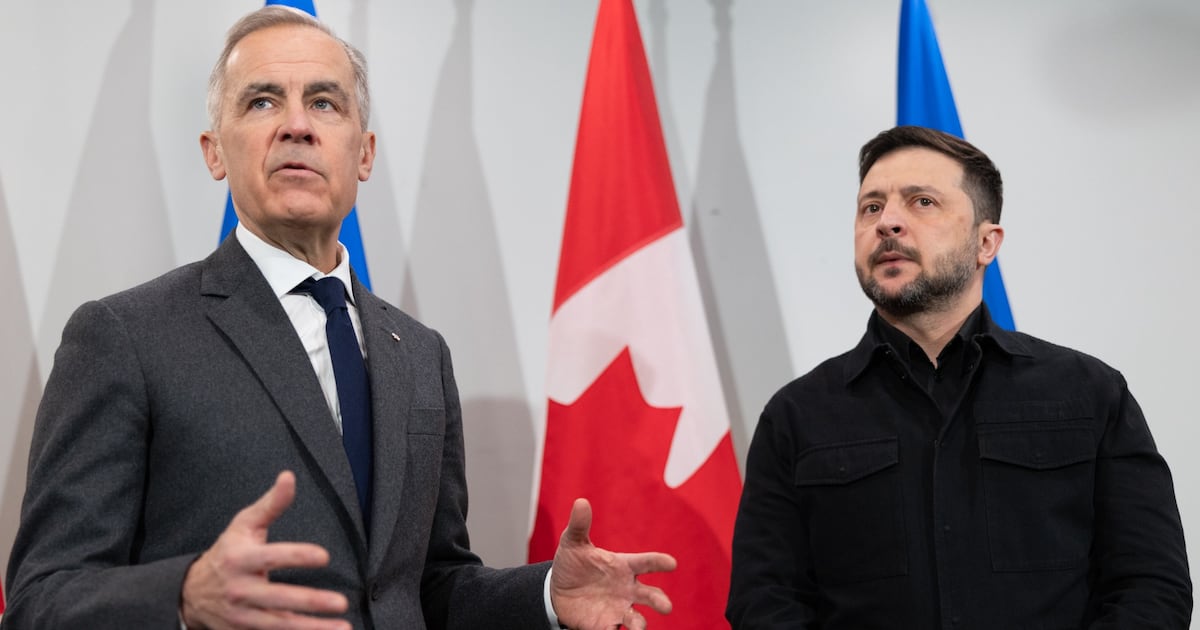
Russia Threatens Canadian Firm Following Military Agreement
Relations between Ottawa and Moscow have reached a new low after the Russian Foreign Ministry officially labeled Canada a “warmonger.” The sharp rhetoric follows the announcement of a strategic drone production partnership between Canadian firm Sentinel R&D and Ukrainian manufacturer Airlogix. During a press briefing on Wednesday, Russian foreign ministry spokeswoman Maria Zakharova escalated the dispute by vowing to publicize the exact physical address of the Hamilton, Ontario-based company, suggesting that Canadian infrastructure is now being factored into Russia’s military and political planning.
Ottawa Refuses to Back Down
In response to the threats, Defence Minister David McGuinty stated that Canada will not be intimidated by Moscow’s tactics. The deal, which aims to produce advanced drones in Canada for deployment on Ukraine’s front lines, is seen by the federal government as a necessary step in supporting a sovereign ally. “We would expect to see the Russians to be critical, because they don’t appreciate the fact that NATO is coming together to assist a country that’s in need,” McGuinty told reporters on Parliament Hill. He emphasized that Canadian military officials are monitoring the situation and remain steadfast in their support for Kyiv.
The Strategic Impact of Drone Technology
The controversy underscores the evolving nature of the conflict, which began with the 2014 invasion and escalated to a full-scale war in 2022. Drone technology has become the primary driver of casualties and tactical shifts on the battlefield, making the Sentinel R&D partnership a high-stakes development for both sides. While Russia’s ambassador in Ottawa accused Canada of seeking to profit from the conflict, Canadian officials maintain the partnership is about defense and innovation in the face of ongoing aggression. As the geopolitical landscape shifts, the safety of Canadian defense contractors has become a new point of concern for domestic security agencies.
Goal Fest at the World Cup: Germany Dominates as Australia Shines in Vancouver
The Rising Tide of Ticks: Why Canada Faces a Growing Threat of Lyme Disease and Beyond
Global Markets Rally as Historic U.S.-Iran Deal Set to Reopen Strait of Hormuz
B.C. Conservatives Overtake NDP in New Post-Leadership Poll
B.C. Teacher Facing 15-Year Ban Over Inappropriate Relationship with Vulnerable Former Student
Sun Fresh Bakery: The Hidden Gem Serving Authentic $5 Steamed Rice Noodles in Chinatown

Opinion: John Rustad Has to Go

B.C. Supreme Court Grants Cowichan Tribes Title to Historic Richmond Lands and Fishing Rights

Vancouver Canucks Gear Up for a Make-or-Break 2025–26 Season

Province to Appeal Cowichan Tribes Land Decision

Kamloops Prepares Four Reverse Referendums on $188M in Major Projects

Kamloops Blazers Announce Off-Season Changes Ahead of 2025–26 Season
-
POLITICS2 weeks ago
New Global Trade War: Trump Administration Targets Canada and EU with Fresh Tariffs Over Forced Labor Claims
-
Environment2 weeks ago
Invasive Mosquitoes Carrying Brain-Swelling Virus Detected in B.C. Sea-to-Sky Region
-
Music News2 weeks ago
Céline Dion and Music Icons Mourn the Loss of Ballad Legend Peabo Bryson at 75
-
International2 weeks ago
Canada Secures Decisive 2-0 Victory Over Uzbekistan as World Cup Fever Hits Edmonton
-
Crime2 weeks ago
Victim Identified in Fatal Surrey Shooting: IHIT Probes Potential Links to Organized Crime
-
POLITICS2 weeks ago
White House Adjusts Tariffs on Steel and Aluminum Derivatives to Bolster Industry
-
Hockey2 weeks ago
Vancouver Canucks Appoint Manny Malhotra as Head Coach Amid Massive Front Office Overhaul
-
Crime2 weeks ago
Actor Nick Pasqual Sentenced to 32 Years to Life Following Brutal Stabbing of Former Partner