Economy
Financial Breaking Point: Canadian Insolvency Filings Surge to Highest Levels Since 2009
Canada sees highest insolvency filings since 2009 as 37,121 people file in Q1 2026. Experts warn of a ‘breaking point’ amid rising costs and debt levels.


A Growing Crisis in Household Finance
New data from the Office of the Superintendent of Bankruptcy reveals a sobering reality for the Canadian economy: consumer insolvencies have reached their highest level in nearly two decades. In the first quarter of 2026, 37,121 Canadians filed for insolvency, marking a volume not seen since the peak of the 2009 global financial crisis. This represents an 8.5 per cent increase compared to the same period last year, signaling that the cumulative pressure of inflation and debt is finally overwhelming household budgets.
The Gap Between Income and Expenses
While the current insolvency rate is technically lower than 2009 levels when adjusted for Canada’s significantly larger population, experts warn that the absolute numbers tell a story of systemic financial distress. Insolvency trustee Doug Hoyes points to a widening chasm between stagnant wages and the soaring costs of essential goods like food and fuel. According to Hoyes, many Canadians have been bridging this financial gap with credit for months, if not years, but are now reaching a definitive breaking point. Global factors, including trade disputes and international conflicts, have further exacerbated supply chain costs, leaving consumers with little room to maneuver.
Regional Spikes and the Shift Toward Bankruptcy
The financial strain is not felt equally across the country. British Columbia led the nation with a 16.2 per cent spike in filings, followed closely by Prince Edward Island and Ontario. Perhaps more concerning to economists is the changing nature of these filings. While consumer proposals—which allow debtors to keep assets while paying back a portion of their debt—still make up 80 per cent of filings, actual bankruptcies are rising faster in provinces like Alberta and Ontario.
The High Cost of Financial Distress
Anna Lund, a law professor at the University of Alberta, notes that the trend toward bankruptcy suggests a deeper level of insolvency. Unlike proposals, bankruptcy often requires the immediate surrender of assets such as homes or vehicles. The shift indicates that a growing number of Canadians are in such precarious positions that they can no longer commit to the multi-year repayment schedules required by consumer proposals. As the economic outlook remains uncertain, experts advise Canadians to prioritize emergency savings and aggressive expense reduction to weather what may be a prolonged period of financial volatility.

Economy
Nation-Building or Overreach? Carney Defends Pipeline Vision Amid B.C. Backlash
PM Mark Carney defends his pipeline and nation-building agenda in B.C. despite criticism from Premier David Eby over the Alberta implementation agreement.
The Quest for Momentum
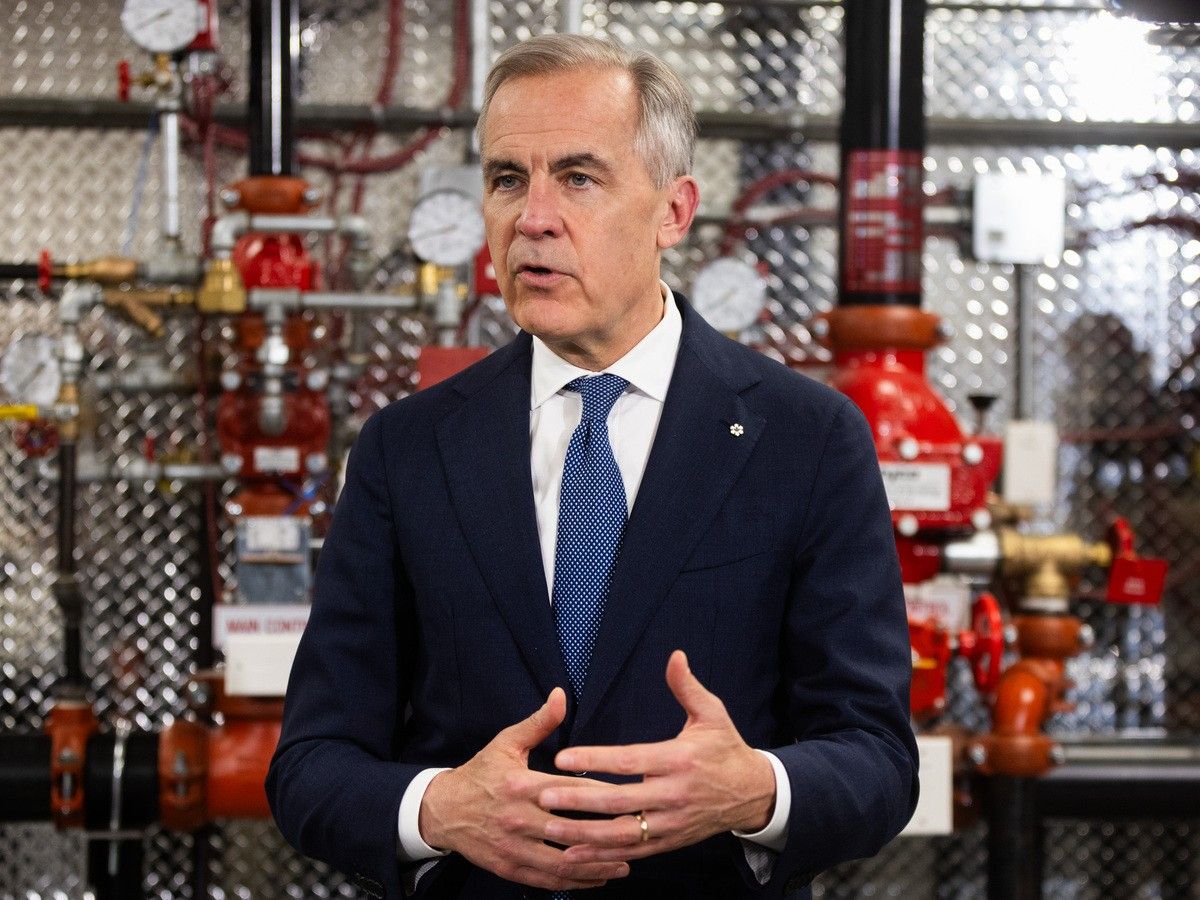
Prime Minister Mark Carney is doubling down on his ambitious nation-building agenda, urging provincial leaders to pivot away from opposition and toward collaborative progress. Speaking before the Greater Vancouver Board of Trade on Wednesday, Carney addressed the growing friction between the federal government and British Columbia, emphasizing a desire to move beyond political roadblocks. ‘What we’re trying to accomplish… is we don’t want to hear what people are against, we want to hear what they’re for,’ Carney told the business audience.
The Alberta Agreement and B.C. Opposition
The tension centers on a recently signed ‘implementation agreement’ between Carney and Alberta Premier Danielle Smith. The deal outlines federal support for a pipeline capable of transporting one million barrels of oil per day to the B.C. coast. While the agreement includes environmental caveats—such as Alberta raising its industrial carbon tax to $140 a tonne by 2040 and committing to carbon capture projects—it has drawn sharp criticism from B.C. Premier David Eby.
Eby has condemned the deal, citing a lack of meaningful consultation with his province. He further suggested that Alberta is receiving ‘special treatment’ as a federal tactic to quell rising separatist sentiment in the Prairies. Despite these concerns, Carney maintains that any project will respect Section 35 constitutional duties to consult and must provide substantial economic benefits to British Columbia.
A Strategic Pivot to Energy and Industry
Defending his economic strategy, Carney highlighted that B.C. remains a central pillar of the federal plan, noting that one-third of the 22 major ‘nation-building’ projects currently under review are located within the province. These include developments in critical minerals, artificial intelligence, and liquefied natural gas (LNG). ‘When we master energy, we master our destiny,’ Carney remarked, signaling that the federal government is prepared to fast-track regulatory approvals by 2027 to ensure Canada remains competitive.
Navigating Provincial Sovereignty
The burgeoning conflict underscores the perennial challenge of Canadian federalism: balancing national economic interests with provincial autonomy. While Carney acknowledged the importance of early conversations with Coastal First Nations and Premier Eby, his tone remained firm. As the federal government pushes for a unified energy corridor, the success of his agenda will depend on whether he can translate ‘momentum’ into genuine interprovincial cooperation.
Economy
Ottawa Sets September 2027 Construction Date for Alberta’s Crucial West Coast Pipeline
The federal government sets Sept. 1, 2027, for Alberta’s West Coast pipeline construction approval, marking a major shift in Canadian energy infrastructure.
A Definitive Timeline for Energy Export
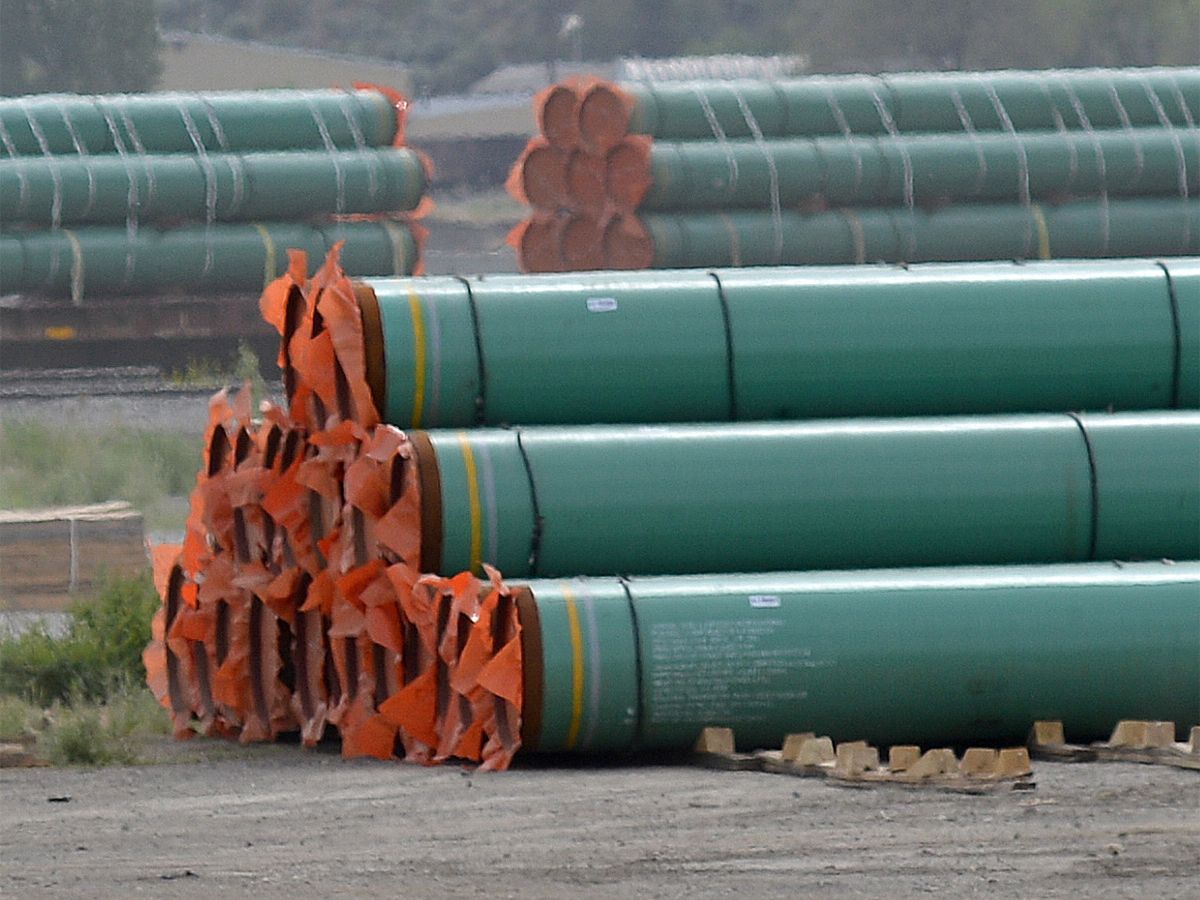
In a significant shift for Canadian energy policy, the federal government has reportedly committed to a firm timeline for the approval of a new Alberta pipeline to the West Coast. Sources indicate that September 1, 2027, has been designated as the date for final construction approval, signaling an end to the regulatory hurdles that have long plagued major energy infrastructure projects in Western Canada. This commitment represents a rare moment of alignment between the federal government and Alberta, aiming to expedite a process that typically spans decades.
National Interest and Regulatory Fast-Tracking
The deal, which is expected to be formalized in a memorandum of understanding, involves a strategic ‘fast-track’ designation. Prime Minister Mark Carney’s administration is reportedly moving to declare the pipeline a project of national interest by October 1 of this year. This designation is intended to streamline the environmental assessment and consultation phases, moving the project toward the finish line with unprecedented speed. This move comes as Alberta prepares to submit its formal pipeline proposal by the end of June, setting the stage for a high-stakes regulatory sprint.
Political Compromise and Economic Stakes
The timing of the announcement has not escaped political observers, as the September 2027 approval date falls just one month before Alberta’s next provincial election. Furthermore, the federal government’s urgency appears tied to broader policy negotiations. In exchange for the pipeline commitment, Alberta has reportedly made concessions regarding the federal industrial carbon tax—a contentious issue for the province. For many Albertans, the deal hinges on certainty; after years of what critics call ‘word salad’ from Ottawa, the promise of ‘shovels in the ground’ by a specific date is a critical metric of success.
Consultations and Future Hurdles
While the date provides a target, several milestones remain. The next twelve months will be dominated by intensive consultations with First Nations, finalizing the exact geographical route, and securing private sector investment. However, with the Carney government pledging its full efforts to meet these deadlines, the energy sector is watching closely to see if this represents a genuine breakthrough in Canadian resource development or a calculated political maneuver ahead of a looming independence referendum in the province.
Economy
Unforeseen Consequences: How Trump’s Metal Tariff ‘Tweak’ Is Crippling Canadian Manufacturing
A technical change in U.S. metal tariffs is devastating Canadian manufacturing, causing product costs to soar and prompting a $1.5 billion federal aid package.

A Subtle Change with Massive Impact
What was initially presented as a move to simplify administrative processes has instead sent shockwaves through the Canadian economy. Last month, a technical adjustment to Donald Trump’s metal tariff regime fundamentally changed how duties are calculated. Rather than assessing the value of the specific metal content within a product, the U.S. now applies a flat 25 per cent tariff to the entire value of the finished good. This shift has effectively expanded the reach of these penalties from primary metal producers to the broader manufacturing sector.
The Steep Cost of Added Value
The impact of this change, which took effect on April 6, is most severe for manufacturers of high-value products. Economists at Desjardins Group highlight the mathematical devastation: a $10,000 product with 20 per cent metal content previously incurred a $1,000 tariff. Under the new rules, that same product faces a $2,500 levy. This exponential increase in costs is particularly damaging to Ontario and Quebec, Canada’s industrial heartlands, where sophisticated manufacturing is the backbone of the local economy.
Corporate Fallout and Government Response
The real-world consequences are already visible in the private sector. BRP Inc., the manufacturer of Ski-Doo snowmobiles, was forced to withdraw its 2027 financial outlook, citing an expected $500 million hit due to the tariff change. Following the announcement, the company’s share price plummeted by 30 per cent. Other manufacturers in Manitoba and across the Prairies are bracing for similar fallout as the scope of the tariffs now covers everything from light trucks to complex machinery.
Ottawa Steps In as Trade Tensions Rise
In response to the mounting pressure, the Canadian federal government has announced a $1.5 billion aid package aimed at supporting affected manufacturers. However, experts warn that subsidies may only provide temporary relief. With Quebec’s effective tariff rate jumping to 9 per cent—more than double the national average—and Ontario’s rising to 6.7 per cent, the structural trade relationship between the two nations is facing its most significant strain in recent history.
Arctic ‘Rust’ Crisis: Thawing Permafrost Turns Pristine Canadian Rivers into Toxic Orange Acid
Montreal Hits Record High for Lyme Disease as Island Becomes Official Risk Zone
NASCAR Legend Kyle Busch Dies at 41, Leaving ‘Rowdy Nation’ in Mourning
A Perfect Storm: Canadian Aid Teams Face Unprecedented Risks in New Congo Ebola Outbreak
Alberta Cabinet Shaken: Key Ministers Resign as Referendum Tensions Boil Over
Nation-Building or Overreach? Carney Defends Pipeline Vision Amid B.C. Backlash

Opinion: John Rustad Has to Go

B.C. Supreme Court Grants Cowichan Tribes Title to Historic Richmond Lands and Fishing Rights

Vancouver Canucks Gear Up for a Make-or-Break 2025–26 Season

Kamloops Prepares Four Reverse Referendums on $188M in Major Projects

Province to Appeal Cowichan Tribes Land Decision

Kamloops Blazers Announce Off-Season Changes Ahead of 2025–26 Season
-
LOCAL2 weeks ago
Quantum Translation: Physicists Unveil New Mathematical Bridge to Solve Black Hole Paradox
-
POLITICS2 weeks ago
Moscow’s Shrunken Spectacle: Victory Day Parade Hits Record Low Duration Without Live Tanks
-
General1 week ago
NHL Unveils 2026 Conference Final Schedule Scenarios as Playoff Intensity Mounts
-
Canadian News1 week ago
Privacy Breach Scandal: Alberta Separatist Leader Defies Provincial Election Investigators
-
Hockey2 weeks ago
Canadiens Overpower Sabres in Dominant Game 3 Victory to Claim Series Lead
-
Asia-Pacific2 weeks ago
Tragedy on Mount Dukono: One Hiker Dead and Two Missing After Defying Exclusion Zone
-
business1 week ago
Canada Asserts Digital Sovereignty with Major AI Infrastructure Launch in British Columbia
-
energy2 weeks ago
Danielle Smith Eyes West Coast Pipeline as Key to ‘Cooperative Federalism’ and National Unity